After Midnight: The Rogue Screenings Where Tomorrow's Cinema Is Being Born Tonight
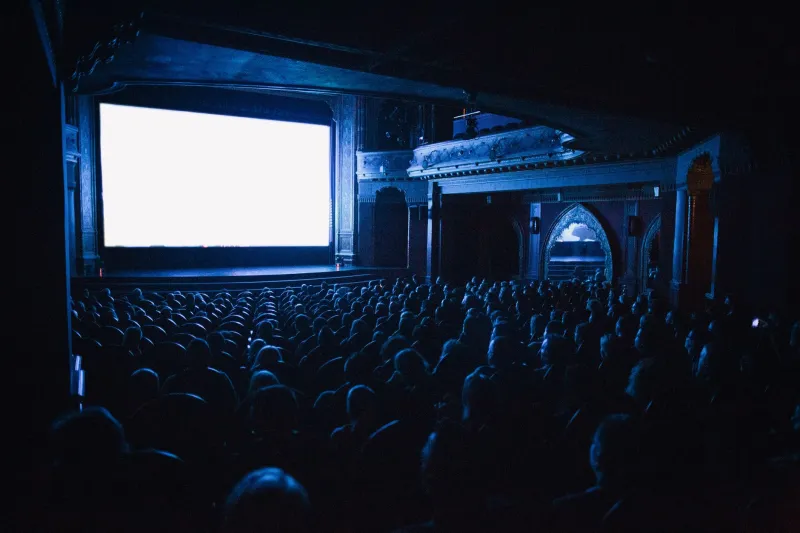
The last showing at most multiplexes wraps up around ten-thirty. By eleven, the popcorn machines are off and the ushers are sweeping. But in certain cities — Austin, Chicago, Portland, Brooklyn, Los Angeles — a different kind of night is just getting started.
The lights go down at midnight. The crowd is small, a little weird, and completely awake. And the film they're about to watch? It probably doesn't have a distributor. It might never play anywhere else. It was made by someone who decided that waiting for permission was taking too long.
Welcome to the late-night underground — and it's having a genuine moment.
A Tradition Reborn
Midnight movies have a long and genuinely wild history in American cinema. El Topo, Pink Flamingos, Eraserhead — these films found their audiences in the small hours, in theaters that were willing to host something the mainstream wouldn't touch. The midnight slot became synonymous with cult cinema, with transgression, with the kind of stuff that wasn't supposed to exist.
That tradition mostly faded through the nineties and early 2000s as home video changed the economics of niche viewing. Why drive to a theater at midnight when you could rent the weird stuff at Blockbuster?
But something has shifted in the streaming era. Paradoxically, the infinite availability of content online has made the physical experience of watching something strange in a room full of strangers feel rare and valuable again. And a new generation of filmmakers has figured out how to use that.
The Strategy Behind the Late Slot
Talk to the directors and producers who are actively programming midnight screenings right now and you hear a consistent logic: the late slot removes pressure in ways that nothing else quite can.
"There are no box office expectations at midnight," says one Brooklyn-based director who's run three consecutive midnight runs of her debut feature over the past year, building word-of-mouth one packed late-night crowd at a time. "Nobody walks in expecting a blockbuster. They walk in curious. That's the best possible audience you can have."
The math works differently too. A film that would look like a failure in a traditional release — pulling three hundred people to a Wednesday matinee — can look like a roaring success if those three hundred people chose to show up at midnight on a Friday and stayed until two in the morning talking about it in the lobby.
That energy is the whole point. Midnight screenings self-select for the invested. The casual viewer isn't driving out at eleven-forty-five. The person who shows up has already committed, and that commitment changes the room.
Testing Grounds for the Unconventional
For filmmakers working outside genre conventions — the ones making films that resist easy categorization, that run long or slow or weird — the midnight slot functions as something close to a laboratory.
One Chicago-based director used a series of late-night screenings to test three different cuts of his experimental feature before locking picture. "I'd watch the audience," he says. "Not in a creepy way. I mean I'd sit in the back and feel the room. Where did they lean in? Where did they shift in their seats? You learn more in two hours of a midnight screening than in six months of notes sessions."
This is film craft operating in real time. The theatrical experience — the shared breath of a room watching the same image — gives filmmakers feedback that no screener link ever could. And the midnight crowd is uniquely honest. They're not being polite. They're not sitting through something out of obligation. If they're bored, you know it.
Building an Audience Before You Have One
There's also a community-building dimension to this that's genuinely new. Social media has given midnight-movie programmers tools that the original cult cinema generation never had. A filmmaker can announce a one-night screening, seed it to the right accounts and film communities, and generate a full house in a city they've never visited — just from online word of mouth.
Several directors have used this model to essentially tour their films like bands tour albums. A week in Austin, a weekend in Portland, two nights in Philadelphia. No traditional distribution deal required. The theater splits the door, the filmmaker sells merch or a digital download code, and the whole operation sustains itself on genuine enthusiasm rather than marketing budgets.
"It feels more like putting on a show than releasing a film," says one director who's been doing exactly this for two years with her debut feature. "Which is maybe what it always should have felt like."
The Theaters That Make It Possible
None of this works without the venues. And it's worth giving credit to the independent theaters — the Alamos, the Music Box, the Roxys, the Castro — that have kept the midnight slot alive as a programmable option rather than ceding those hours entirely to special event screenings of Rocky Horror.
These theaters understand that the late-night crowd is a specific, loyal demographic. They come back. They tell people. They treat the theater as a cultural institution rather than a convenience. Programming a midnight series isn't just charity toward filmmakers — it's smart business for venues trying to differentiate themselves from the Netflix-at-home alternative.
Some theaters have started actively recruiting emerging filmmakers for their midnight slots, treating the late-night program as a curatorial statement about what cinema can be. It's the kind of institutional support that used to come exclusively from film festivals, now happening in real time, in cities where these filmmakers actually live.
What It Costs, and What It Costs
To be clear: this path is not easy. Midnight releases require a filmmaker to become their own publicist, booker, and sometimes their own projectionist. The financial returns are modest. The hours are genuinely brutal — loading out after a Q&A at two in the morning, then driving to the next city.
And there's a ceiling. A film that's built its entire audience through midnight screenings faces real challenges if it ever wants to cross over into conventional distribution. Some distributors see the midnight circuit as validation. Others see it as a signal that the film already found its audience and is therefore a harder sell.
But for filmmakers who've decided that waiting for the traditional gatekeepers is a losing game — who've made something that doesn't fit the algorithm and doesn't want to — the midnight slot represents something more than a distribution workaround. It's a philosophy.
Cinema, at its best, has always been a late-night proposition. A room full of people, in the dark, watching something they weren't sure they were ready for. The hour just makes it honest.