Tiny Cartridges, Big Statements: The Gen-Z Filmmakers Going All-In on Super 8
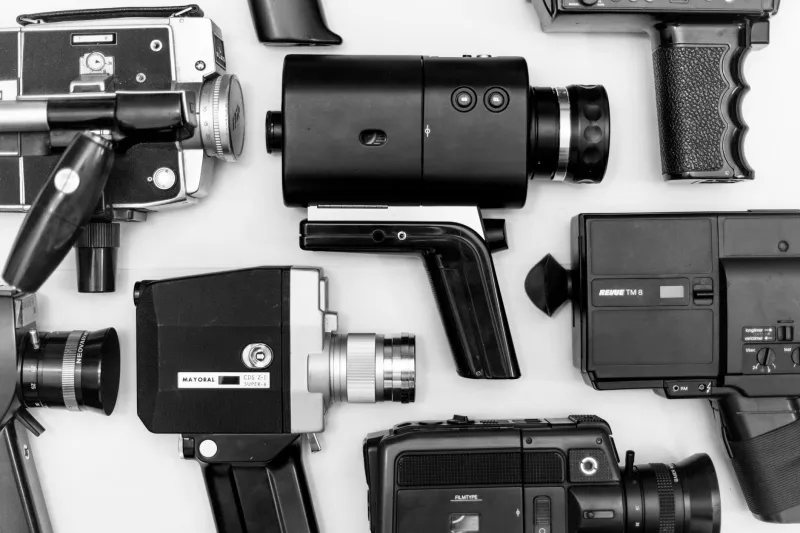
The cartridge is about the size of a deck of cards. It holds roughly three and a half minutes of footage. You can't preview what you've shot. You can't delete anything. Once you've burned through your roll, it's gone — off to a lab, if you can find one still operating, and then back to you weeks later in the form of a physical print that may or may not look the way you imagined.
For a generation raised on infinite storage and instant playback, this sounds like a nightmare. For a growing number of young American filmmakers, it sounds like freedom.
The Format That Refused to Die
Kodak relaunched Super 8 film stock in 2016, a decision that seemed optimistic at the time and now looks almost prophetic. What was marketed partly as a nostalgia product has become something stranger and more interesting: a primary creative medium for filmmakers in their twenties who have no personal nostalgia for the format whatsoever.
They didn't grow up watching home movies on Super 8. They grew up on YouTube. They learned filmmaking on iPhones. And somewhere along the way, a significant number of them decided that the most interesting thing they could do was pick up a camera that operates almost entirely beyond their control.
"I'd been shooting digitally for two years and everything looked the same," says one film student at a state university in Ohio. "Not the same as other people's work — the same as my own work. Every shot was too clean, too correctable. I started shooting Super 8 because I needed to be surprised by my own footage again."
That desire for surprise — for footage that talks back — shows up in almost every conversation you have with young Super 8 shooters. The unpredictability isn't a bug they're tolerating. It's the feature they came for.
Constraints as Creative Engine
Film schools have long taught that constraints force creativity. Super 8 takes that principle and makes it physical, chemical, irreversible. You get one take, or maybe two if your budget allows. You can't zoom in on a monitor to check focus. The grain does what it wants. Light leaks happen. Sprocket holes occasionally misbehave.
These aren't aesthetic choices in the conventional sense — they're conditions the filmmaker agrees to enter. And that agreement changes how you shoot.
"When you know you only have three minutes on a roll, you stop messing around," says a filmmaker based in Chicago who has been shooting Super 8 for the past two years. "You block more carefully. You think about what you actually need. Digital made me lazy in ways I didn't even realize until I went back to film."
The practical limitations also push filmmakers toward a different relationship with their subjects. Long, coverage-heavy shoot days become impossible. The intimacy of Super 8 — the small camera, the quiet mechanics, the finite footage — tends to produce a different energy on set. Subjects relax. The filmmaking becomes collaborative in a way that a full digital rig sometimes isn't.
Community Built Around the Cartridge
One of the most compelling aspects of the Super 8 revival is what's grown up around the format itself. Young shooters aren't just making films — they're building communities organized around the shared experience of working with physical media.
Film swaps have become a genuine phenomenon. Two filmmakers shoot on the same roll of film — one exposes it, rewinds, mails it to the other, who shoots over it. The resulting double exposures are genuinely unpredictable, a collaboration mediated by chemistry and postal service. Groups organized around film swaps now exist in most major American cities and in several smaller ones, connected through social media but deeply invested in the physical.
Zines documenting Super 8 work have proliferated alongside the format. Unlike the polished editorial design of mainstream film publications, these tend toward the handmade — photocopied, stapled, distributed at underground screenings and mailed between subscribers. They're documents of a community that's chosen, consciously, to operate outside the clean efficiency of digital distribution.
"There's something about holding a physical thing that someone made," says a filmmaker in Portland who edits a zine focused on analog filmmaking. "You can feel that a person touched it. That's not nothing. We've gotten really good at forgetting that."
Underground screenings — projected Super 8 prints in basements, galleries, and borrowed spaces — have become social events that feel genuinely distinct from anything a streaming platform can replicate. The projector noise, the slightly unsteady image, the communal experience of watching something that exists as a physical object moving through light: it's a different kind of cinema.
The Corporate Filmmaking They're Pushing Against
Ask young Super 8 shooters what they're reacting against and the answer is usually some version of the same thing: a film industry that has made the production process faster, cheaper, and more homogeneous simultaneously. Digital tools have democratized filmmaking in real ways, but they've also contributed to a visual monoculture where everything is sharp, color-graded to the same palette, and optimized for a screen that might be six inches wide.
Super 8 is, in this reading, not just an aesthetic choice but a statement about what filmmaking is supposed to feel like — both to make and to watch. It's slow. It's expensive relative to digital. It demands patience and craft in exchange for results you can't fully predict or control.
For a generation that grew up in a culture of infinite content, that friction is the point. The cartridge runs out. The footage is irreplaceable. The grain is real. And somewhere in that reality, these filmmakers are finding something that feels, against all expectation, like the future.