Getting the Color Right: The Archivists Reclaiming Black Cinema Frame by Frame
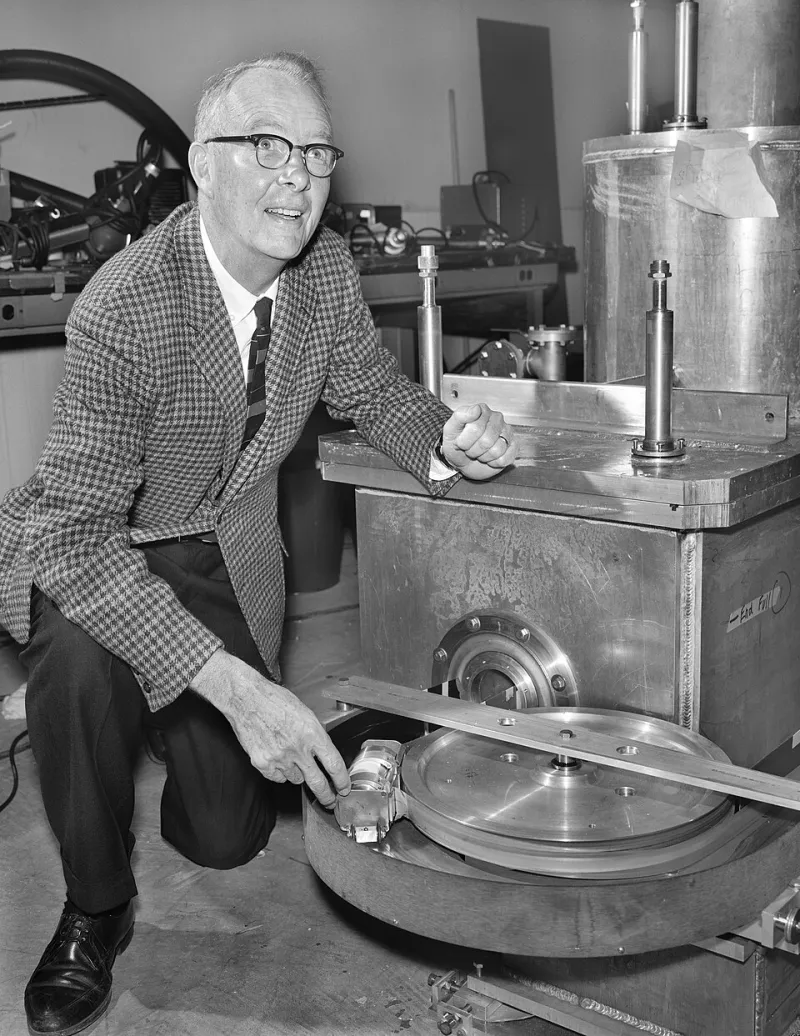
Photo: Lawrence Berkeley National Laboratory / Department of Energy (Very minor restoration by Adam Cuerden), Public domain, via Wikimedia Commons
The first time Denise Okafor sat down with a digitized reel of a 1930s Oscar Micheaux film, she knew something was wrong before she could name it. The image was technically clean — no heavy grain, no significant warping — but the skin tones were off. Not subtly off. Dramatically, almost violently off. The Black actors on screen looked ashen, flattened, drained of the warmth the original nitrate stock would have captured.
"It looked like someone had taken a photograph of the film rather than actually restoring it," says Okafor, a color scientist who now works exclusively on archival restoration projects focused on Black American cinema. "The image existed. But it wasn't telling the truth."
This is the problem at the center of an urgent, underreported effort happening right now in labs, university archives, and independent restoration houses across the country: how do you restore Black cinema accurately when the mainstream preservation infrastructure was never really built with Black cinema in mind?
A History of Neglect Dressed as Preservation
Early Black cinema — films produced by Black directors, featuring Black casts, and distributed through the so-called "race film" circuit that operated largely outside Hollywood from the 1910s through the 1940s — survived in fragments. Many reels were lost entirely. The ones that made it through often did so in poor condition, stored without climate control, duplicated on inferior stock, or simply ignored by institutions that didn't consider them worth the resources.
When digitization efforts did reach these films, they frequently ran into a problem rooted in how film stock itself was calibrated. For most of the 20th century, the standard photographic and cinematic materials were optimized for lighter skin tones. Kodak's famous "Shirley cards" — the reference images used to calibrate color printing in photo labs — featured only white women until the 1970s, when complaints from furniture and chocolate manufacturers (who couldn't get accurate color reproduction for their products) forced a revision. The implications for how Black subjects were photographed, developed, and ultimately preserved run deep.
When archivists who weren't specifically trained in this history applied standard color correction algorithms to early Black films, they often made the existing problem worse — normalizing the image to a baseline that was never neutral to begin with.
The Science of Reclamation
Correcting this requires a different kind of technical work. It starts with research that goes well beyond the film itself.
Okafor and colleagues like her spend significant time in pre-restoration prep — studying production photographs, contemporary reviews, promotional materials, anything that might give a more accurate picture of what the original image was intended to look like. They consult with historians of early Black cinema. They examine surviving prints of the same film from different sources, comparing degradation patterns to triangulate what the original might have been.
Then comes the color work itself, which is part science and part interpretation. "You're making decisions constantly," Okafor explains. "And you have to be honest that they are decisions. You're not just revealing what was there. You're making an argument about what was there."
That argument has real consequences. Skin tone rendering in particular carries enormous weight. A Black actor whose complexion is rendered too cool reads differently on screen than one whose warmth is accurately preserved. It's the difference between a dignified presence and a flattened one — and when these films are the primary visual record of Black performers, directors, and storytellers from an era that mainstream Hollywood largely excluded them from, getting it wrong isn't just a technical failure. It's a historical one.
The Institutions Catching Up — and the Ones That Aren't
Some archives are taking this seriously. The Library of Congress has made notable investments in Black cinema preservation in recent years, and organizations like the UCLA Film & Television Archive have developed specialized protocols for handling race films. Independent projects like the ongoing effort to restore the work of director Spencer Williams have drawn on interdisciplinary teams that include historians and cultural critics alongside technicians.
But the field is still catching up to the scale of the problem. Many regional archives and university collections hold reels of early Black cinema that haven't been meaningfully assessed, let alone restored. Funding is inconsistent. The expertise required — combining film chemistry, digital color science, and deep knowledge of Black film history — is rare and not systematically trained.
"There's no graduate program that teaches you this specifically," says Marcus Webb, an archivist at a mid-sized university film collection who has been developing his own restoration methodology over the past decade largely through self-directed research. "You piece it together from film preservation training, from conversations with other people doing similar work, from reading a lot of history. It's not a career path anyone designed."
What Accurate Restoration Actually Changes
The stakes of this work extend beyond historical accuracy in the abstract. These films are being encountered by new audiences — in classrooms, in streaming catalogs, at film festivals devoted to recovering lost cinema. How they look shapes how they're understood.
A poorly restored print of a Micheaux film can inadvertently reinforce the idea that early Black cinema was technically primitive, aesthetically rough, less sophisticated than Hollywood productions of the same era. In reality, many race films were made with considerable craft under impossible resource constraints. When the restoration reflects that craft — when the lighting design is visible, when the performers' expressions read fully, when the cinematography communicates what it was intended to communicate — the film makes a different argument about its own history.
"These filmmakers were doing extraordinary things," Okafor says. "And when you restore the image honestly, you start to see it. The restoration is how the film gets to make its case to a new audience."
That's not a small thing. Cinema history in America has always been written partly through which films get preserved well enough to be seen. The work of color scientists like Okafor is, in a real sense, the work of deciding whose history gets told — and how clearly.
The Work That Remains
The restoration of early Black cinema is nowhere near complete. Estimates suggest that as many as 75 percent of all silent films are lost; for race films, the survival rate is believed to be even lower. What remains is precious and precarious.
The archivists doing this work are driven by something that goes beyond professional obligation. "Every frame we get right is a frame that exists now in a way it didn't before," Webb says. "Someone's grandmother might be in one of these films. Someone's great-great-uncle might have directed it. That's real. That matters."
It does. And the quiet, painstaking labor of getting the color right is how cinema history starts telling a fuller truth.