Racing the Clock: The Film Restorers Who Won't Let Cinema Crumble Into Nothing
Racing the Clock: The Film Restorers Who Won't Let Cinema Crumble Into Nothing
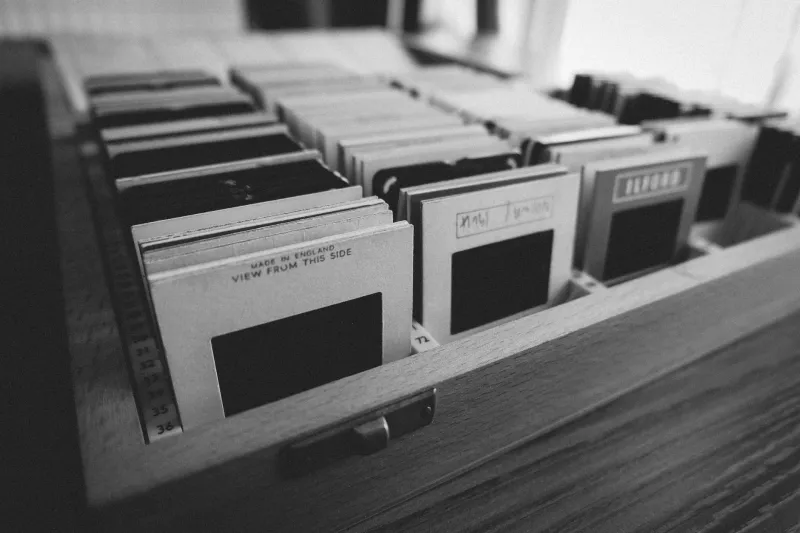
There's a particular kind of heartbreak that comes from watching something disappear in slow motion. Film restorers know it well. They'll pull a can off a shelf, crack it open, and find what was once a living, breathing movie reduced to a brittle, vinegar-reeking mess — a chemical ghost of something audiences once lined up around the block to see.
This is not a hypothetical crisis. It is happening right now, in storage facilities across the country, in the back rooms of studios that have long since stopped caring, and in the personal collections of people who had no idea what they were sitting on. Nitrate film — the stock used before the 1950s — is notoriously unstable. It can combust spontaneously. Acetate film, its supposed successor, suffers from what archivists grimly call "vinegar syndrome," a slow degradation that warps, shrinks, and ultimately destroys the image. And digital? Don't get too comfortable there either. Hard drives fail. Formats become obsolete. The Library of Congress has estimated that roughly 70 percent of all silent films are already gone forever.
Seventy percent. Let that number sit with you for a second.
The Science of Slow Death
Film decay isn't dramatic. It doesn't announce itself. It's a chemical process, patient and indifferent, driven by humidity, temperature, and the organic compounds baked into the stock itself. Cellulose nitrate — the material used in early Hollywood productions — is essentially a close cousin of gun cotton. Entire film vaults have gone up in catastrophic fires, taking irreplaceable reels with them. The 1937 MGM vault fire and the 1978 Fox nitrate fire are two of the most cited disasters in archival history, each one erasing chunks of American cinema that no amount of money can bring back.
Acetate film, introduced as a "safety" alternative, turned out to have its own slow-burn problem. As it deteriorates, it releases acetic acid — the same stuff in vinegar — and that smell is essentially the film announcing its own funeral. Once vinegar syndrome sets in, the window for intervention narrows fast. The emulsion separates. The image fades. The reel becomes unspoolable.
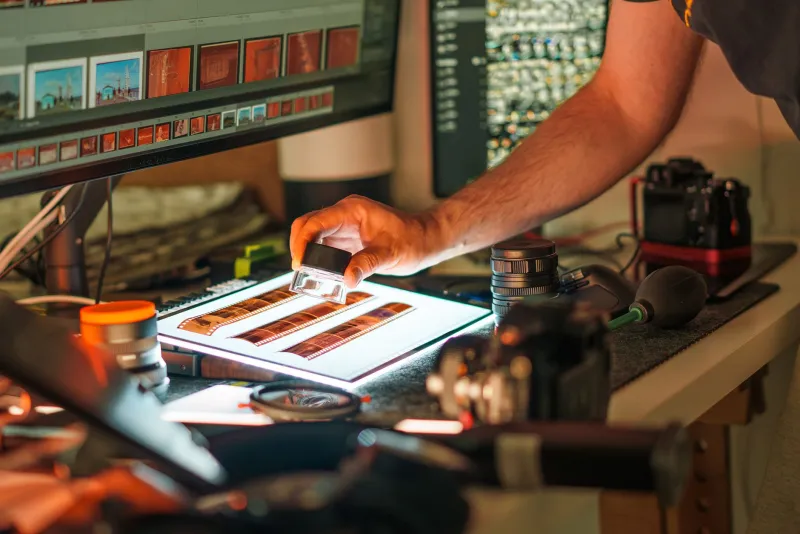
Restorers work against this timeline with a combination of chemistry, digitization technology, and sometimes just sheer stubbornness. The process of restoring a single film can take years. Scanning a reel frame by frame at 4K or even 8K resolution, cleaning the image digitally, correcting color shifts, repairing splices, reconstructing missing sequences from secondary sources — it's painstaking work that demands both technical precision and a deep, almost irrational love for movies.
What Gets Saved and What Gets Left Behind
Here's the uncomfortable truth: not everything can be saved. Restoration is expensive — a full feature-length restoration can run anywhere from $50,000 to several hundred thousand dollars depending on the condition of the source material and the level of work required. Funding comes from a patchwork of sources: the Academy Film Archive, the Library of Congress, the National Film Preservation Foundation, occasional studio investment, and private donors who happen to care deeply enough.
But the math doesn't work out in cinema's favor. There are far more films in need of restoration than there is money to restore them. So choices get made. Priorities get set. And often, those priorities reflect the same commercial logic that let so many films deteriorate in the first place. Big titles with recognizable names get resources. Obscure regional films, early works by directors who never broke through, Black cinema from the pre-integration era, experimental shorts — these tend to fall through the cracks.
The people doing this work are acutely aware of what those choices mean. Every film that doesn't get funded is potentially a film that disappears. Not eventually. Now. While we're talking about it.
The Moral Weight of Preservation
Spend any time talking to film archivists and you'll notice something: they don't describe their jobs the way most people describe jobs. There's a sense of obligation that runs through their work that goes beyond professional responsibility. They talk about it the way doctors talk about medicine — like the stakes are genuinely life and death, even if what's dying is made of light and shadow.
That's not melodrama. When a film is lost, something real is lost with it. Not just entertainment, but evidence — of how people lived, how they spoke, what they feared, what made them laugh. Early Hollywood films are primary documents of American culture in the same way that letters and diaries are. When they're gone, the historical record has a hole in it that nothing else can fill.
Restoration work has brought back films that fundamentally changed how we understand their directors, their eras, and their cultural contexts. The reconstruction of Fritz Lang's Metropolis using footage discovered in a Buenos Aires archive in 2008 is one of the most celebrated examples — a film that scholars and cinephiles thought they knew turned out to be significantly longer and more complex than the truncated version that had circulated for decades. Closer to home, ongoing efforts to restore films from the early Black independent cinema movement — works by Oscar Micheaux and others — are reshaping conversations about American film history in ways that matter far beyond academia.
When the Money Runs Out
The funding landscape for film preservation in the US is fragile in ways that should alarm anyone who cares about cultural heritage. Federal support through the Library of Congress and the National Endowment for the Arts is perpetually under political pressure. Studio archives, which house enormous quantities of potentially restorable material, operate on business logic that doesn't always align with preservation goals. A film that can't generate licensing revenue is a film that's hard to justify spending money on.
Independent and nonprofit organizations are picking up some of the slack, but they're operating with limited resources and an overwhelming backlog. The Academy Film Archive alone holds tens of thousands of titles. The pace of deterioration doesn't slow down to wait for grant cycles.
What's needed — and what advocates have been pushing for, with mixed results — is a more systematic national commitment to film preservation. Not just as a cultural nicety, but as a genuine infrastructure priority. The argument isn't complicated: a country that loses its films loses a version of its own memory. And memory, once gone, doesn't come back.
The Work Continues
Despite everything, the restorers keep showing up. They keep pulling cans off shelves, assessing damage, scanning frames, writing grants, and making the case — again and again — that this work matters. There's something quietly heroic about it, even if it rarely makes headlines.
Cinema is not just product. It's not just IP. It's a record of human experience, captured in light, preserved on fragile strips of plastic and nitrate and acetate that were never designed to last forever. The people fighting to extend that life are doing something that deserves more attention, more funding, and a lot more gratitude than they typically receive.
The last frame of any film is just a frame. But it points toward everything that came before it. And that's worth saving.