Listen Closer: The Underground Sound Artists Giving Cinema Back Its Ears
There's a scene in a recent micro-budget indie that's been making the festival rounds — no stars, no marketing budget, shot on a converted dairy farm in rural Vermont — where the main character sits alone in a kitchen at 3 a.m. You don't hear music. You don't hear dialogue. What you hear is the refrigerator compressor cycling on, the tick of a wall clock slightly out of rhythm with it, and somewhere outside, wind moving through a screen door that's not quite latched. The scene lasts about two minutes. It is completely, devastatingly devastating.
That's not an accident. That's craft. And it's the kind of craft that a growing community of independent filmmakers is betting their entire creative philosophy on.
The Dialogue Trap
Mainstream American cinema has a talking problem. Not in the sense that people shouldn't speak — but in the sense that studios have quietly trained audiences to process films almost entirely through words. Exposition is delivered verbally. Emotion is underlined by swelling orchestral cues. Silence gets filled. Always. The result is a kind of cinematic wallpaper: technically impressive, emotionally blunt.
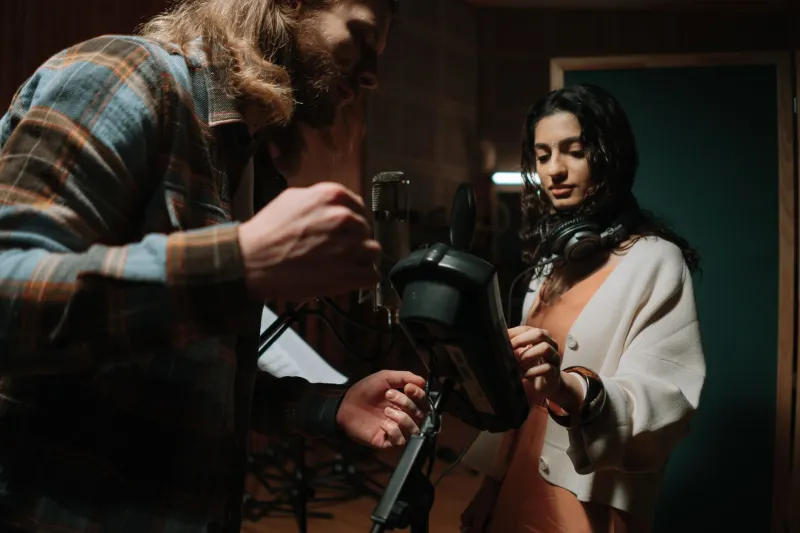
Sound designers working outside the studio system have started pushing back hard against that default. For them, audio isn't the layer you add after picture lock — it's the layer you design from day one, sometimes before a single frame is shot.
"Most directors I've worked with in the studio world hand you the picture and say 'make it sound good,'" says one Brooklyn-based sound designer who's worked on a string of festival favorites over the past five years. "The indie directors I love call me during pre-production and ask what the movie should feel like before they've figured out what it should look like. That changes everything."
Texture Over Score
One of the defining characteristics of this movement — and it does feel like a movement now, not just a scattered handful of auteurs — is the deliberate use of what sound people call texture: the environmental, atmospheric, and ambient layers that create a world before any character opens their mouth.
Think about how a parking garage sounds different at noon versus midnight. How a hospital corridor carries a specific kind of silence that isn't really silence at all. How a conversation between two people in a moving car sounds different depending on whether the windows are up or down, whether it's raining, whether the engine is old or new. These are not details most audiences consciously register. But they feel them. Deeply.
Filmmakers working in this space are increasingly leaning into binaural recording techniques, unconventional microphone placement, and what some call "sound geography" — the deliberate mapping of how audio moves through a physical space and what that movement reveals about character or theme. A protagonist who always sounds slightly too close to the mic. An antagonist whose footsteps never quite sync with what we expect. These aren't bugs. They're sentences.
Streaming's Accidental Gift
Here's an unexpected plot twist: streaming platforms, for all their sins against cinema, may have accidentally created the best possible environment for this kind of audiophile filmmaking.
When you watch something on a decent home theater setup — or even a good pair of headphones — you're closer to the sound design than you've ever been in a multiplex. The controlled environment strips away the ambient noise of a crowded theater. The intimacy rewards subtlety. A sound designer who places a specific environmental cue in the left rear channel knows that a home viewer wearing headphones will catch it in a way that a theater audience almost certainly won't.
Several indie filmmakers have started explicitly designing their sound with home listening in mind — not as a compromise, but as a deliberate creative choice. They're treating the living room or the bedroom as a listening space the way a recording artist might treat a studio, thinking about how the material will translate across different playback environments.
Platforms like MUBI and the Criterion Channel have also created communities of viewers who want to watch this way — attentively, in the dark, with the volume up. That audience is small but passionate, and it's giving filmmakers permission to trust the ear.
The Festival Circuit as Testing Ground
Sundance, SXSW, and smaller regional festivals like the Overlook Film Festival and Wisconsin Film Festival have become crucial proving grounds for sound-forward filmmaking. The theatrical environment of a properly tuned festival screening room — often better calibrated than the average multiplex — lets audiences experience these films the way their creators intended.
Word travels fast in those circles. A film that makes people feel something they can't immediately explain often turns out, on reflection, to have been doing it through sound. Post-screening conversations that start with "I don't know why that hit me so hard" frequently end with someone pointing out what the sound design was doing underneath the surface.
That's the goal, really. Not to be noticed. To be felt.
Who's Doing the Work
The names doing the most interesting work in this space tend not to be household names — yet. Many of them come from adjacent disciplines: electronic music composition, field recording, radio drama, even architectural acoustics. They bring frameworks and vocabularies that traditional Hollywood sound departments don't always have access to.
Some have started cross-pollinating with the music world, collaborating with experimental artists and ambient composers who think about sound in fundamentally different ways than a traditional film scorer would. The line between score and sound design in their work isn't blurry — it's intentionally erased.
Others are pushing into immersive audio formats — Dolby Atmos, spatial audio — not to create spectacle, but to create intimacy. The technology that was built for blockbuster action sequences turns out to be extraordinarily well-suited to quiet, precise emotional storytelling when someone decides to use it that way.
What It Asks of the Audience
This kind of filmmaking makes a demand. It asks you to slow down. To stop scanning for the next plot point and just be in the space the film is creating. For audiences trained on the pace and volume of mainstream releases, that can feel disorienting at first — even uncomfortable.
But the filmmakers who are doing this work aren't interested in making you comfortable. They're interested in making you present.
There's something almost countercultural about it in the current media landscape — the insistence that cinema can reward patience, that the ear is as sophisticated an instrument as the eye, that a refrigerator compressor and a slightly unlatched screen door can break your heart if someone knows what they're doing.
Someone does. Several someones, actually. And they're just getting started.