Guardians of the Forgotten Frame: The Private Collectors Saving Cinema One Reel at a Time
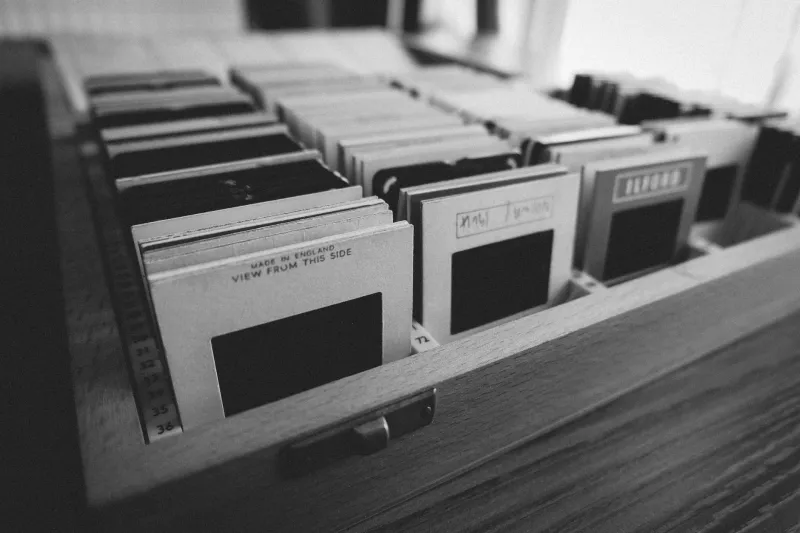
Somewhere in suburban Ohio, a retired electrician named Gerald keeps a chest freezer in his garage that hasn't stored food in fifteen years. Instead, it holds a dozen 16mm reels of a 1947 regional melodrama that no film school, studio vault, or library system has ever catalogued. He found them at an estate sale for eleven dollars. He's spent roughly four thousand since then making sure they don't fall apart.
Gerald isn't unusual. Not anymore. Across the country, a quiet, loosely connected underground of collectors, hobbyists, and self-taught preservationists are doing something the major studios largely stopped doing decades ago: caring about the films nobody else wants.
What Gets Left Behind
Hollywood has always had a complicated relationship with its own past. The early nitrate fires, the studio consolidations, the simple economics of storage — all of it conspired to erase enormous swaths of American cinema. By some estimates, roughly 70 percent of all silent films are gone forever. Early talkies didn't fare much better. And that's just the stuff scholars have bothered to quantify.
What doesn't make those statistics is the longer tail: the B-westerns, the regional horror films, the industrial shorts, the educational reels, the drive-in double features that were never considered serious enough to preserve. These are the movies that slipped through every institutional net — too obscure for the Library of Congress, too low-budget for the studio archivists, too weird for the film schools.
That's where the collectors come in.
"The studios made a business decision," says one collector based outside of Memphis who asked to be identified only as Donna. She runs what she calls a "soft archive" out of a converted sunroom — climate-controlled, humidity-monitored, packed floor to ceiling with flat cans and lobby cards and original pressbooks. "They decided certain films weren't worth the cost of storage. We just decided differently."
The Currency of Decomposition
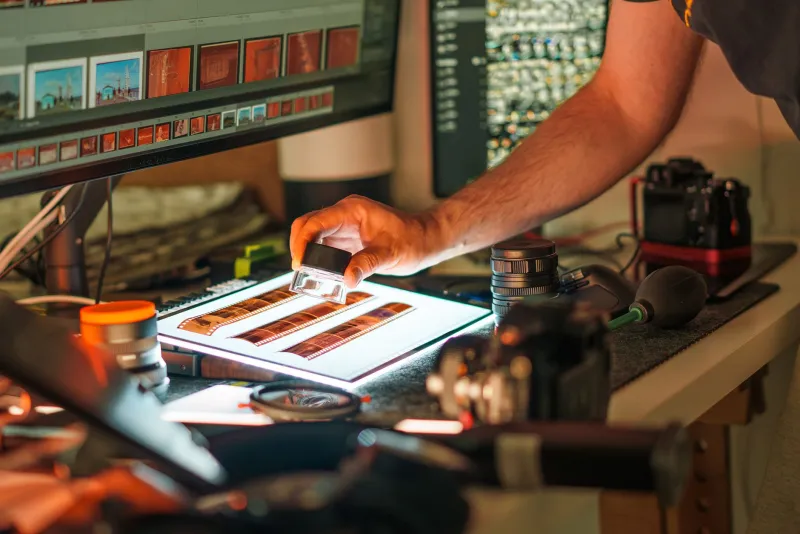
Film doesn't wait around. Nitrate stock is notoriously combustible and chemically unstable. Even acetate — the so-called "safety film" that replaced nitrate in the 1950s — suffers from what conservators grimly call "vinegar syndrome," a slow acidic breakdown that smells exactly like what it sounds like and eventually renders the footage unreadable.
The window for saving a deteriorating reel is narrow. Which is why the collectors who find themselves in possession of older materials often describe their work less like a hobby and more like a race.
Marcus, a schoolteacher in rural Pennsylvania, started buying 35mm prints at flea markets about twelve years ago. What began as decoration — he liked the aesthetic of the cans — turned serious when he realized some of what he'd acquired was genuinely rare. "I pulled out a reel one afternoon and realized I couldn't find any record of this film existing anywhere online. Not on any database, not in any catalog. It just wasn't documented."
He's since had the print professionally inspected. It's in stable condition. He's also reached out to three separate film preservation organizations, none of which have the resources to take it on right now.
So it stays in his basement. Carefully boxed. Waiting.
More Than Just Reels
The physical film is only part of what these collectors are preserving. Many have accumulated the surrounding ecosystem of cinema history — the lobby cards, the half-sheet posters, the production stills, the shooting scripts, the press kits, the behind-the-scenes photographs. Materials that studios once distributed by the thousands and then never thought about again.
This ephemera tells a different story than the films themselves. It reveals how movies were marketed to specific communities, how regional distributors pitched pictures to small-town theaters, how studios framed stories for different demographics. It's social history as much as film history.
"People think of a lobby card as decoration," says a collector in Portland who specializes in pre-Code Hollywood materials. "But when you look at a stack of them together, you start to see patterns. Who was being sold to. What fears and desires were being appealed to. It's a window into the culture in a way the films themselves sometimes aren't."
The Network Nobody Built
What's remarkable about this preservation underground is how organic it is. There's no official organization, no membership dues, no coordinating body. Collectors find each other through online forums, at film festivals, through word of mouth at estate sales. Trust is built slowly, and trading — not selling — is the preferred currency.
Many are deeply ambivalent about publicity. Some worry about theft. Others are technically in murky legal territory, holding prints of films whose rights have been absorbed into corporate catalogs that no longer actively distribute them but haven't exactly released them either. It's a gray zone that most collectors navigate by simply keeping quiet and keeping careful.
But there's also a generosity to the community that's hard to miss. Collectors regularly share digitization resources, point each other toward restoration specialists, and coordinate to make sure duplicate prints aren't being redundantly preserved while unique materials go unaddressed.
"We're not competing with each other," Donna says. "We're all trying to beat the same clock."
Why They Do It
Ask any of these collectors why they do this, and you'll get variations on the same answer. Something about the irreplaceability of it. Something about the feeling that a film, once gone, takes a piece of the world with it.
For some, it started with a specific movie — a childhood favorite that went out of print, a film a parent loved that became impossible to find. For others, it's more abstract, a general conviction that cultural memory matters and that someone has to act as its custodian when institutions fail.
Gerald, back in Ohio, puts it plainly. "These films were made by real people. They were watched by real people. Somebody's grandmother went to see this picture on a Friday night in 1947 and it meant something to her. Am I supposed to just let that disappear because a studio doesn't see the business case for keeping it alive?"
He closes the freezer lid carefully. The reels inside hold steady at a temperature cold enough to slow decomposition to nearly nothing.
For now, that's enough.
The Bigger Question
What these collectors represent — beyond their individual dedication — is a failure of institutional imagination. The films being saved in spare bedrooms and climate-controlled garages across America should, in a better-resourced world, be held by universities, museums, and publicly funded archives. The fact that they're not says something uncomfortable about how we value cultural history when it stops being commercially useful.
But that's a systemic problem, and systemic problems don't wait for systemic solutions. In the meantime, there's Gerald and his chest freezer. There's Donna and her sunroom. There's Marcus and his Pennsylvania basement, waiting to hear back from a preservation organization that might never have the budget to respond.
The films survive because these people decided they should. That's not a small thing. In a lot of cases, it's the only thing standing between a piece of American cinema and the void.