When the Booth Goes Dark: The Dying Art of the Human Projectionist
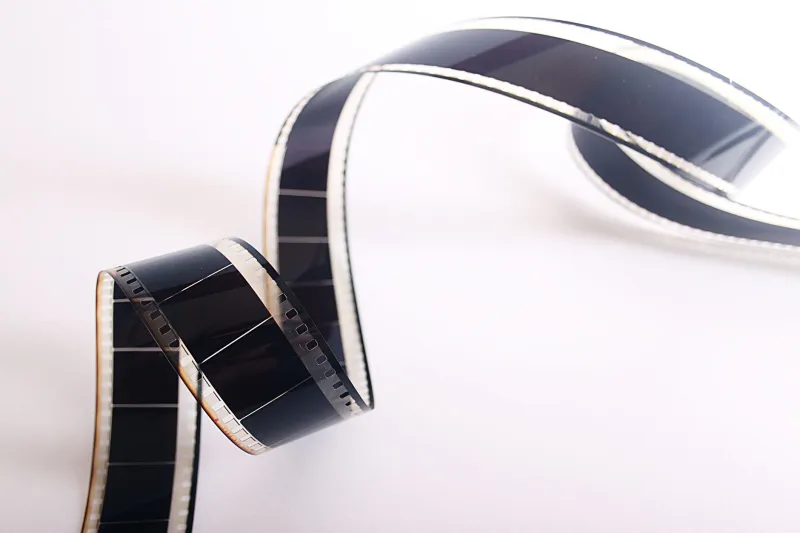
There's a smell that veteran projectionists describe in almost identical terms, no matter where in the country you find them. It's warm and slightly acrid, somewhere between a hardware store and a darkroom — the particular scent of celluloid moving fast through a hot gate. Once you've worked in a projection booth for any length of time, that smell apparently never leaves you. Neither does much else.
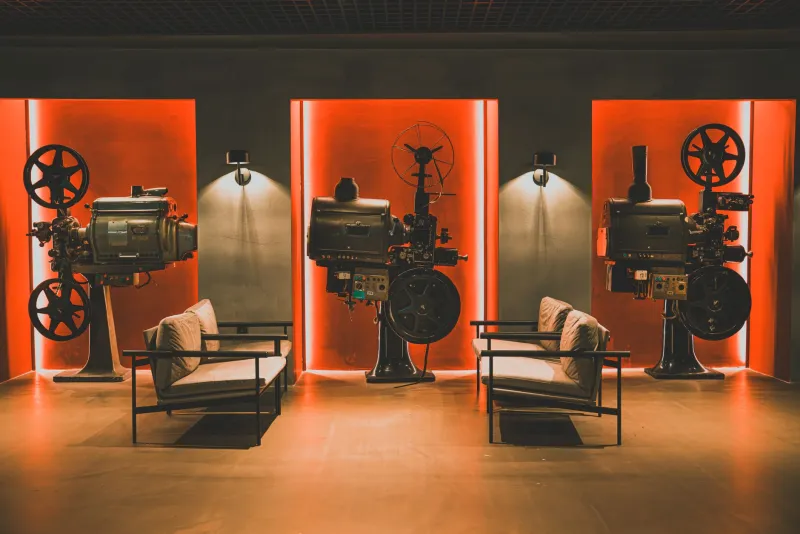
For most moviegoers, the booth has always been an abstraction. A little rectangle of light high on the back wall. A faint mechanical hum beneath the score. But for a generation of projectionists who came up through union apprenticeships and learned their trade on machines the size of refrigerators, that room was a whole world — one that the film industry has spent the last fifteen years methodically dismantling.
A Trade Built on Feel
Dave Kowalczyk ran the booth at a multiplex outside Cleveland for 31 years before the chain switched to digital servers in 2012. He describes learning the craft the way a musician might describe learning an instrument — not just technically, but physically.
"You learned the machine by touch," he says. "You knew when a reel was running out not just by the clock but by the sound. There was a specific flutter right before the changeover cue. If you missed it, you'd get that white flash on screen and everyone in the house knew you'd screwed up."
Changeovers — the moment a projectionist switches from one reel to another mid-film — were the defining skill of the craft. In a large theater running a two-and-a-half-hour feature, a projectionist might execute four or five of them per screening, each one requiring split-second timing. Done right, the audience never noticed. Done wrong, the illusion shattered.
That kind of invisible mastery is exactly what gets lost in translation when you swap a human being for a hard drive.
The Union That Ran Hollywood's Theaters
At its peak, the International Alliance of Theatrical Stage Employees (IATSE) represented thousands of projectionists across the United States. Local chapters in major cities set strict standards for training and certification. You didn't just walk into a booth — you apprenticed, sometimes for years, under someone who'd already put in a decade.
The knowledge passed person to person. How to splice a broken print without losing a frame. How to adjust the arc lamp's carbon rods for maximum color fidelity. How to diagnose a focus drift from the sound of the motor alone. None of it was in any manual that mattered. It lived in the hands and ears of the people doing the work.
By the mid-2000s, that community was already contracting. The transition to digital projection — accelerated dramatically by Hollywood's decision to stop striking 35mm prints for wide releases around 2013 — didn't just change the equipment. It eliminated the job category almost entirely. Where a multiplex once employed three or four full-time projectionists, a single part-time employee with minimal training could now babysit a server rack.
"They called it 'automation,'" says retired Local 110 member Theresa Vance, who worked Chicago theaters for 22 years. "I called it a layoff that nobody had to announce."
What the Machines Can't Replicate
Ask any working projectionist what digital can't do and you'll get a long list, delivered with the calm certainty of someone who has seen both sides.
Film, they'll tell you, breathes. The slight organic instability of a celluloid image — what cinematographers call "film grain" and digital engineers call "noise" — is actually a living artifact of the photochemical process. It moves. It shifts. It gives the image a presence that flat digital pixels, however sharp, simply don't carry the same way.
Beyond the aesthetic, there's the matter of judgment. A skilled projectionist watched the screen constantly during a presentation, ready to adjust framing, tweak focus, or catch a print defect before it became a distraction. They were, in a very real sense, the last human in the chain between a filmmaker's vision and an audience's experience.
Robert Fenn, who still runs a 35mm booth at an art house cinema in Portland, Oregon, puts it plainly: "A digital server doesn't care if the image looks right. It just plays the file. I care. That's the difference."
Fenn is part of a small but devoted community of projectionists keeping analog presentation alive, mostly at independent theaters and repertory cinemas that have made 35mm a selling point rather than an anachronism. For them, the booth isn't nostalgia — it's a conscious artistic choice.
The Sensory Archive
There's something almost archival about the knowledge these projectionists carry. The physics of light through a lens at a specific throw distance. The precise torque required to thread a particular brand of film through a specific model of projector without introducing scratches. The way an older print sounds different from a newer one — tighter, more brittle, more prone to breaking at the splice points.
None of this exists in any database. It exists in the people who learned it, and those people are aging out of the industry with nowhere to pass the knowledge on.
Some efforts are being made to preserve it. Organizations like the Kodak-backed Film Forever initiative and various film schools have started documenting projection technique on video. A handful of cinematheques run occasional workshops. But these are small efforts against a large tide.
"You can watch someone thread a projector on YouTube," acknowledges Kowalczyk. "But watching isn't the same as doing it a thousand times until your hands know what to do before your brain catches up."
Cinema's Last Invisible Craftspeople
What makes the projectionist's disappearance particularly poignant is how thoroughly it went unnoticed by the culture at large. Directors get retrospectives. Cinematographers get career tributes. Projectionists just quietly stopped showing up to work one day, and the movies kept playing anyway.
But something changed. Something subtle enough that most audiences couldn't name it, but real enough that filmmakers and critics who grew up watching projected celluloid feel it every time they sit in a modern multiplex. The image is sharper. The sound is cleaner. And somehow, the room feels a little emptier.
Theresa Vance, who still volunteers at a film preservation event in the Chicago suburbs every spring, doesn't spend much time being bitter about how things turned out. But she does think the industry made a choice it didn't fully examine.
"They asked: can we do this cheaper and more reliably without a person in the booth? And the answer was yes. What they didn't ask was: does the person in the booth add something that a machine can't? And the answer to that is also yes."
The booth isn't entirely dark yet. In theaters across the country, a small number of projectionists still thread film, still listen for the flutter before the changeover, still stand in rooms that smell of warm celluloid and decades of movies. They know something about cinema that the industry has largely decided it no longer needs to know.
Whether anyone thinks to ask them before they're gone is a question worth sitting with.