Reel by Reel: The Quiet Americans Who Still Run 35mm Film Through Their Hands
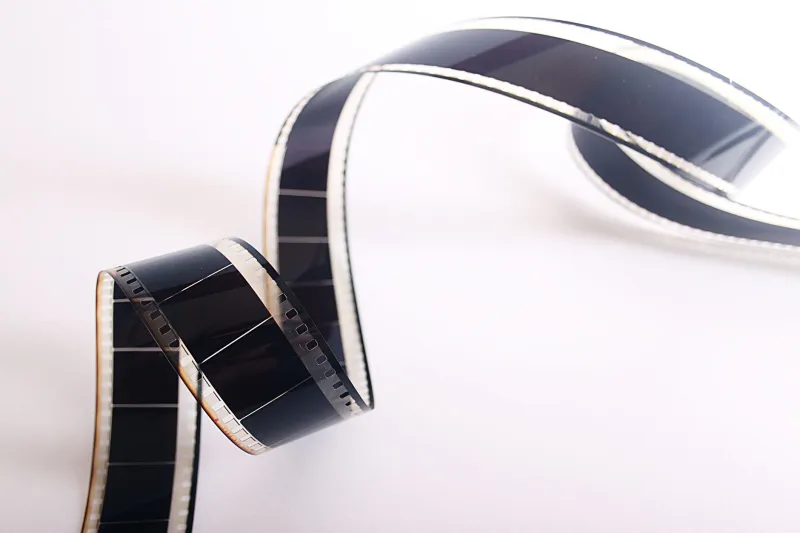
There's a room most moviegoers never see. It sits above the theater, behind a small rectangular window, humming with heat and mechanical rhythm. Inside, a person stands with their hands wrapped around a spool of 35mm film, feeding it through a projector with the kind of practiced care you'd associate with a surgeon or a glassblower. The image spills forward, hits the screen, and the audience below has absolutely no idea that a human being made that happen.
That person is a projectionist. And in 2024, they're nearly gone.
The Craft Nobody Talks About
When digital projection swept through American theaters in the early 2010s — pushed along by the industry's rush to cut costs and streamline distribution — it didn't just change the equipment. It quietly eliminated an entire profession. Thousands of union projectionists lost their jobs almost overnight. The booths that once required skilled operators were replaced by automated systems that a manager could start with a tablet from the lobby.
But not everyone walked away.
In cities like New York, Chicago, Portland, and Austin, and in small towns you might not expect, a loose network of dedicated projectionists still shows up for work. They maintain aging Simplex and Strong projectors, stock spare parts sourced from eBay and estate sales, and thread film through gates with the same muscle memory their predecessors developed decades ago. They work in independent rep houses, museum screening rooms, film archive theaters, and the occasional private cinema belonging to a collector who refuses to give up the format.
For them, the work isn't nostalgia. It's vocation.
What It Actually Takes
Ask any working 35mm projectionist what the job demands, and they'll tell you it's equal parts technical knowledge, physical intuition, and emotional investment. Threading a projector isn't like pressing play on a Blu-ray. You're handling a physical object — one that can snap, warp, or jam without warning. You learn to read the film, to feel when tension is wrong before a problem becomes a disaster.
Splicing is its own discipline. When a reel breaks — and they do break — you've got minutes, sometimes seconds, to cut the damaged section, rejoin the film cleanly, and get the image back on screen before the audience notices. It's the kind of pressure that separates people who understand the craft from those who merely operate the equipment.
Then there's the matter of focus. Digital projectors auto-adjust. 35mm doesn't. A good projectionist watches the image constantly, making micro-corrections to keep the picture sharp. They monitor the carbon arc or xenon lamp, manage heat buildup, listen to the sound of the machine the way a mechanic listens to an engine. It is, without exaggeration, an art form that most of the industry simply forgot to mourn.
Portraits in Celluloid
Take someone like a projectionist working the weekend screenings at a rep cinema in Chicago's Logan Square neighborhood. He learned the craft from an older colleague who'd run film since the 1970s, treating the knowledge transfer like an apprenticeship in a trade guild. He talks about his first successful changeover — the moment you switch between two reels mid-screening without the audience detecting a cut — the way other people talk about scoring a goal or nailing an audition. It was a threshold. A rite of passage.
Or consider the woman running the projection booth at a Pacific Northwest museum's film series, where they screen archival prints of silent-era and classic Hollywood films for audiences who travel specifically for the experience. She describes the weight of holding a nitrate-adjacent print — even a safety film copy of something from the 1940s — as something that forces you to slow down. "You're holding the actual object that was meant to be seen," she's said. "Not a copy of a copy of a file. The thing itself."
These aren't people clinging to the past out of stubbornness. They're people who understand that the format carries something that digital hasn't fully replicated — a warmth, a grain, a slight imperfection that reads to the human eye as alive.
Why It Still Matters
The argument for 35mm isn't purely aesthetic, though the aesthetic case is real. Film grain isn't a flaw — it's texture. The slight flicker of a projected print, the way colors bloom differently under light passed through physical dye layers, the audio characteristics of an optical soundtrack — these aren't bugs in the system. They're the system.
But the deeper argument is about presence. A digital file is infinitely reproducible, infinitely stable. A print is singular. It ages, accumulates scratches, carries the history of every screening it's survived. When a projectionist runs a print that was struck in 1962 and has been screened hundreds of times since, there's a lineage in that room that no streaming platform can manufacture.
The projectionist is the person who honors that lineage. They're the one who checked the reels before you arrived, who made sure the sound was balanced, who threaded the film with enough care that you'd never know anything could go wrong. Their invisibility is, in a way, the measure of their skill.
The Question of Survival
The honest reality is that the community is shrinking. Older projectionists retire and there aren't enough young people learning to replace them. Parts for vintage equipment become harder to find. Prints deteriorate or get locked in archives. The economics of running a 35mm screening — factoring in equipment maintenance, print rental, and the labor of someone who actually knows what they're doing — are brutal compared to flipping on a digital server.
Some organizations are fighting back. The Film Foundation, various regional film societies, and a handful of forward-thinking independent theaters have made preservation of 35mm projection part of their explicit mission. Kodak still manufactures film. Certain distributors, like Janus Films and Kino Lorber, continue to strike new prints for theatrical release. Christopher Nolan's insistence on shooting and projecting film has kept the conversation alive at the studio level.
But the projectionists themselves — the people in the booth — largely operate without institutional support or public recognition. They do it because they believe in it.
The Last Human Link
Here's what gets lost when we reduce cinema to content delivery: the idea that a movie is an event, not just a file. That watching a film in a theater, with a crowd, through light passed through physical celluloid, is a fundamentally different experience from watching the same title on a screen at home.
The projectionist is the person who makes that difference tangible. They are, in the most literal sense, the bridge between the story and the audience. They hold the film in their hands before you ever see it. They're responsible for the first and last frame.
There's something worth honoring in that. Something worth keeping alive — even if it means learning to splice film in a hot booth above a half-full theater on a Tuesday night, doing work that most people will never think to credit.
Cinema lives in the image on the screen. But it breathes, just a little, in the hands of the person running the reel.