Two Screens, Two Cinemas: How Streaming Killed the Middle Movie
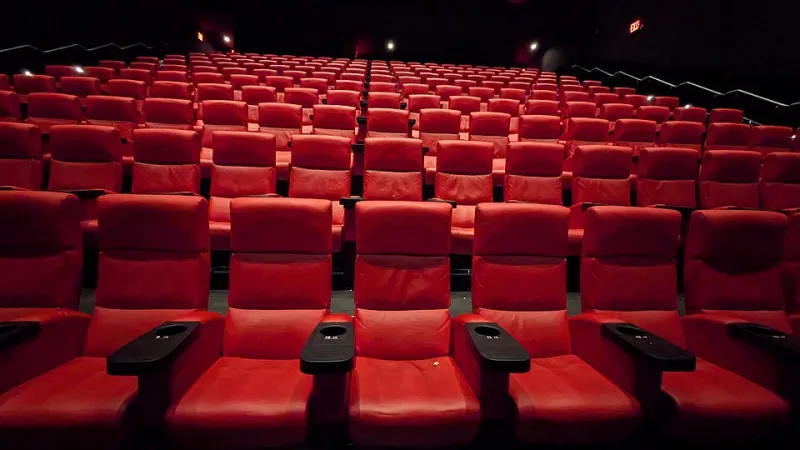
Photo: Eden, Janine and Jim from New York City, CC BY 2.0, via Wikimedia Commons
There used to be a kind of movie that showed up at your local multiplex without much fanfare — no Marvel logo, no awards-season drumroll, just a solid story about complicated people doing complicated things. A drama about a grieving father trying to reconnect with his estranged daughter. A thriller about a public defender who knows her client is lying. A road movie that didn't explain itself. These films weren't blockbusters, but they weren't indie curios either. They were the working middle class of American cinema, and they are quietly disappearing.
The reason isn't mysterious. It's structural. And it has everything to do with what happened to theatrical windows.
What a Theatrical Window Actually Is — and Was
For decades, the theatrical window was a foundational piece of the film business. A movie opened in theaters, played for 90 days minimum, then moved to home video, cable, and eventually streaming. That window gave films room to breathe commercially. A mid-budget drama could open modest, build word of mouth over weeks, and still turn a profit before it ever hit a living room screen.
Then streaming happened. Not gradually — fast. Netflix started pushing day-and-date releases, meaning films debuted simultaneously in theaters and on the platform. Other streamers followed. During the pandemic, studios made emergency deals with platforms that were supposed to be temporary. Most of them weren't.
Now the window has shrunk to as little as 17 days for some releases. For others, it doesn't exist at all.
The Two-Tier System Nobody Officially Announced
What's emerged in its place is a system that nobody formally declared but everyone in the industry understands: you're either making a movie for theaters or you're making one for streaming, and those are increasingly different creative projects aimed at different emotional registers.
Theater-bound films are almost exclusively spectacle — franchise entries, prestige awards contenders, and horror films that depend on communal audience energy. These are movies that studios believe audiences will actually leave their couches for. And they're probably right.
Everything else — the mid-budget character studies, the adult dramas, the genre films that rely on nuance rather than noise — gets routed to streaming. Which sounds fine until you realize what that routing actually means for how those stories are developed.
"The way a movie gets made is shaped entirely by where it's going to live," says one veteran development executive who asked to remain unnamed. "If it's going straight to a platform, you're writing for a different viewer. Someone who might pause it, check their phone, come back. That changes the pacing, the structure, the emotional risk you're willing to take."
What the Algorithm Wants — and What It Doesn't
Streaming platforms don't greenlight films the same way studios do. They're working from data — completion rates, skip rates, what keeps subscribers from canceling. That data tends to reward familiarity. Stories that feel like other stories that tested well. Characters who are legible within the first ten minutes. Plots that don't demand too much patience.
This isn't a conspiracy. It's just math applied to storytelling, and the math doesn't love ambiguity.
The mid-budget drama — the kind of film that used to be Paramount's bread and butter in the 1990s, that launched careers for directors like Jonathan Demme, Kathryn Bigelow, and Steven Soderbergh — thrives on ambiguity. It needs room to be strange. It needs an audience willing to sit with discomfort. The theatrical experience, for all its popcorn and sticky floors, historically created that willingness. You paid $15, you drove somewhere, you sat in the dark. You were committed.
Streaming removes the commitment. And without commitment, certain kinds of stories become harder to justify.
The Greenlight Gap
The numbers reflect this. Between 2015 and 2023, the number of mid-budget films — roughly defined as productions with budgets between $15 million and $60 million — released theatrically by major studios dropped by more than half, according to multiple industry analyses. The films that filled that gap didn't disappear entirely; many migrated to streaming. But the ones that did migrate changed shape in transit.
Scripts got tightened. Endings got cleaner. Moral complexity got smoothed into digestible conflict arcs. A film that might have spent three acts sitting with a character's ambivalence now needs to resolve that ambivalence in a way that lands before the credits roll and the autoplay kicks in.
Filmmakers notice. "I had a project — a drama about two women navigating a land dispute in rural Georgia — that I'd been developing for years," one director told us. "Every streamer passed because they said the conflict wasn't 'active' enough. A studio might have taken a chance on it theatrically ten years ago. That space just doesn't exist now."
The Stories We're Not Seeing
The casualty list isn't abstract. It's specific kinds of American stories: working-class narratives without redemption arcs, regional films that don't flatten their geography for a national audience, character studies about people in their 40s and 50s navigating ordinary catastrophe. Films about grief that don't rush to healing. Stories where the ending is honest rather than satisfying.
These aren't niche interests. They're the movies that used to make up a significant portion of what America watched and talked about. Films like Terms of Endearment, Ordinary People, The Insider, Michael Clayton — none of these would be obvious greenlight candidates in today's market, at least not for theatrical release.
Some of them might find homes on streaming. But they'd arrive differently, made differently, and experienced differently. The theatrical window wasn't just a distribution mechanism. It was a creative incubator that told certain stories they were worth the full treatment.
Where This Goes
There's cautious optimism in some corners. A few studios are experimenting with limited theatrical runs specifically designed to build streaming buzz — essentially using theaters as marketing for the platform release. A24 and Neon continue to prove that thoughtful, mid-budget films can still find theatrical audiences when they're positioned correctly.
But these are exceptions operating within a system that's fundamentally reorganized around a different logic. The theatrical window, as a commercial and creative structure, isn't coming back in its old form. The question is whether what replaces it can still make room for the stories that need a little darkness, a little silence, and an audience that showed up on purpose.
Right now, that's not a question anyone in the industry is answering confidently. And the films that can't wait for the answer are the ones we'll never get to see.