Defending the Unexpected: The Festival Programmers Who Refuse to Let Algorithms Pick Your Next Favorite Film
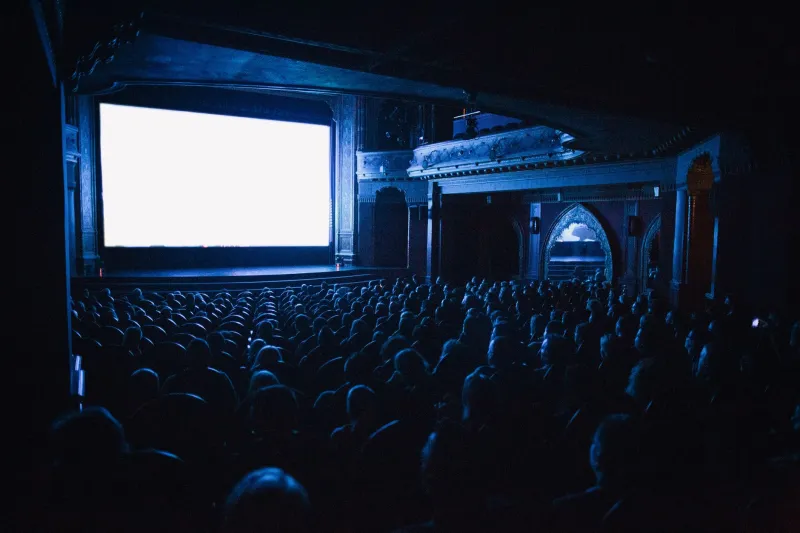
There's a moment every good film festival programmer knows — the one where you're sitting in a dark screening room somewhere in Rotterdam or Austin or a rented theater in Tribeca, watching something that defies every category you brought with you, and you think: nobody's algorithm would have found this. That moment is exactly what they're fighting to protect.
Across the country, a relatively small circle of artistic directors and senior programmers are doing the unglamorous, often thankless work of curating film festivals that still prize surprise over safety. And increasingly, they're doing it in direct tension with the data-driven machinery of the streaming era.
What the Algorithm Wants (and What It Misses)
Streaming platforms are extraordinarily good at one thing: giving you more of what you've already shown you like. The recommendation engine is optimized for engagement, for the comfortable extension of existing taste. If you watched three slow-burn Scandinavian crime dramas, you'll get a fourth. If you lingered on a mid-budget American rom-com, the platform takes note.
What that system can't do — structurally, almost philosophically — is introduce genuine rupture. It can't hand you something that breaks the pattern of your viewing history in a way that expands rather than alienates. That's a human job. And festival programmers have been doing it long before Netflix had a homepage.
"The algorithm optimizes for the known," says one veteran programmer who has worked with both Sundance and regional festivals across the Midwest. "My job is to optimize for the unknown. Those are genuinely opposite missions."
The consequences of algorithmic dominance aren't abstract. When streaming platforms acquire distribution rights to films before or during festival runs — a practice that's accelerated dramatically since 2020 — they often reshape how those films are marketed, sometimes burying challenging work behind more commercially palatable titles in their libraries. A film that a programmer fought hard to include because it was formally risky or politically uncomfortable can disappear into a platform's catalog within weeks of release, effectively unseen.
The Selection Table Is a Battleground
Most audiences never see the back end of a festival's programming process. What looks like a curated lineup of exciting discoveries is actually the result of months of internal debate, distributor negotiations, and outright fights over what belongs in the program.
"You're always negotiating between what you believe in and what you can actually get," explains an artistic director at a mid-sized festival in the Pacific Northwest. "Distributors want premiere status, they want placement in the right section, they want to control how the film is framed. Sometimes you push back and sometimes you lose. But the moment you stop pushing back, you've just become a showcase for whoever has the best publicist."
The rise of platform-backed films has added a new wrinkle. Streaming services now produce and acquire films at a scale that gives them enormous leverage with festivals. A prestigious acquisition can validate a film's awards campaign; festivals need marquee titles to sell tickets and attract press. The relationship is symbiotic in ways that can quietly compromise editorial independence.
Smaller festivals, paradoxically, sometimes have more freedom. Without the commercial pressure of a major market, programmers at regional and specialty festivals can take risks on work that would never crack a top-tier lineup — films from first-time directors, work from underrepresented communities, formally experimental pieces that challenge what cinema is even supposed to do.
Discovery as an Act of Resistance
There's something almost political about the way the best programmers talk about their work. Discovery — genuine, disorienting, life-changing discovery — has become a kind of resistance act in the streaming era.
Consider how streaming platforms handle foreign-language film. Despite the success of titles like Parasite and Roma, the actual depth of international cinema that reaches American audiences via streaming remains thin. Platform algorithms tend to surface the internationally successful, the already-validated, the familiar-enough. Meanwhile, the festival circuit has always been the primary mechanism through which genuinely obscure international work finds American eyes.
"If you're a filmmaker from, say, rural Colombia or rural Georgia — the country, not the state — your film is not going to get recommended to anyone on a platform," one programmer points out. "But it can screen at a festival and change someone's life. That chain of human enthusiasm, from programmer to audience to word of mouth, is irreplaceable. It doesn't have a data model."
The Fight to Keep Seats Filled With Strangers
One of the less-discussed functions of a film festival is the social experience of watching something in a room full of people who didn't all self-select into the same taste profile. When you buy a festival pass, you're signing up for the unexpected. You're agreeing to sit through something you might not have chosen. That's a fundamentally different relationship with cinema than solo streaming.
Programmers are acutely aware that this communal dimension is part of what they're protecting. The discovery of a film at a festival — the conversation in the lobby afterward, the argument over dinner, the film that splits a room down the middle — creates a cultural moment that an algorithm simply cannot manufacture.
"I want people to walk out of a screening not knowing what to say," one programmer told us. "That silence before the conversation starts — that's the whole point. You can't engineer that with data."
The battle isn't over. Festival programming remains one of the few genuinely human-powered mechanisms for surfacing cinema that falls outside the commercial mainstream. As long as people are willing to sit in the dark and be surprised, the programmers fighting to make that happen are doing something quietly essential — defending the edges of cinema against the gravitational pull of the already-known.