Bringing the Dream Back: The People Obsessed With Saving America's Grandest Movie Theaters
Bringing the Dream Back: The People Obsessed With Saving America's Grandest Movie Theaters
There's a particular kind of heartbreak that comes from standing inside a movie palace that's been left to rot. Gilded plasterwork dissolving into dust. A chandelier hanging by what looks like stubbornness alone. Velvet seats that haven't held an audience in thirty years, still facing a screen that went dark before most of the preservationists trying to save the place were even born.
And yet — somehow — people keep showing up. With blueprints. With crowdfunding campaigns. With a conviction that borders on the irrational and a love for cinema that refuses to quit.
Across the United States right now, a loose but fiercely dedicated movement is doing something that most city planners and real estate developers would call a terrible investment: spending millions of dollars to bring dead movie theaters back to life. Not multiplex chains. Not IMAX bunkers. The old ones. The weird, beautiful, irreplaceable ones built in the 1920s and '30s when going to the movies wasn't just entertainment — it was an event, a ritual, a brief escape into somewhere that felt like it couldn't possibly be real.
What Makes a Movie Palace Worth Saving?
The term "movie palace" gets thrown around loosely, but there's a specific architectural ambition behind the original ones that separates them from every theater built after World War II. These were buildings designed to overwhelm you the moment you walked in — to make you feel, even before the projector clicked on, that something extraordinary was about to happen.
Art Deco geometry, Moorish arches, Egyptian Revival motifs, Baroque excess — the architects behind these spaces weren't shy. They borrowed from everywhere and apologized to no one. The lobbies were meant to feel like palaces from another world. The auditoriums were designed to make a factory worker from Detroit or a cotton farmer from rural Texas feel, for two hours on a Friday night, like they belonged somewhere magnificent.
That's the thing restoration advocates keep coming back to when you ask them why any of this matters. It's not really about architecture. It's about what the architecture did to people. What it still does, when it's given the chance.
Detroit's Art Deco Jewel: A City Fighting for Its Own Reflection
In Detroit, the story of theater restoration is inseparable from the story of the city itself. When the Fox Theatre on Woodward Avenue was threatened with demolition in the late 1980s, a local businessman named Mike Ilitch stepped in and committed to a full restoration. What followed was a $12 million project that brought back the original hand-painted ceilings, the ornate ironwork, the sheer operatic scale of a building that seated over 5,000 people.
But the Fox is the famous one. The one that made the papers.
Deeper in the city, smaller battles are still being fought. Preservationists have spent years circling theaters like the United Artists Building, a 1928 skyscraper with a gothic fantasy of a theater at its base, watching the clock on its structural condition and trying to piece together funding that moves slower than the decay. The people doing this work will tell you, without much drama, that they've accepted the possibility of losing. They keep going anyway.
What drives someone to that point? Mostly, it seems to be a very specific memory. A first movie seen in a place like this. A grandparent who took them. The feeling, impossible to fully articulate, that the building itself was part of the story.
A Moorish Mirage in Rural Texas
Not every restoration story unfolds in a major city with a donor base and a tourism board. Some of the most remarkable ones happen in places where the odds are almost comically bad.
In a small town in West Texas — the kind where the population fits on a single census page — a Moorish Revival theater built in 1929 sat shuttered for two decades before a retired schoolteacher named Gloria Reyes decided she wasn't going to let it disappear. What started as a local petition turned into a nonprofit, which turned into a capital campaign, which turned into a full structural restoration that took six years and required grant money from the National Trust for Historic Preservation, a GoFundMe that went semi-viral after a local journalist wrote about it, and more volunteer weekends than Reyes can count.
"People drove in from three counties over to help strip paint," she told a regional newspaper when the theater reopened. "You'd have a retired rancher working next to a college architecture student. Nobody cared. They just wanted it back."
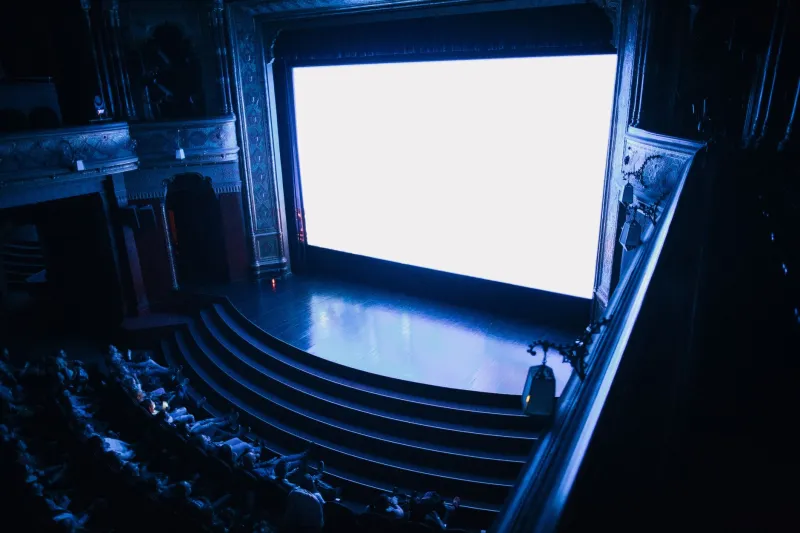
That reopening night, the theater showed Casablanca. The house was full. People who hadn't been inside the building since childhood sat in seats their grandparents had once occupied. A few of them, by multiple accounts, cried.
The Architecture of Collective Memory
It's worth slowing down on that image for a second — a full house in a restored theater, watching an old film, in a town that almost lost the building entirely. Because that's really what this movement is about, underneath all the fundraising logistics and structural engineering reports.
Movie palaces were built to be shared. Not in the way a park is shared, passively, by people moving through the same space. Shared in the way a story is shared — actively, together, in the dark, all pointed in the same direction. That experience created a kind of civic memory that's genuinely hard to replicate anywhere else.
When a theater like that goes dark and stays dark, something specific leaves a community. Not just a building. A place where the community had a version of itself it could recognize. When it comes back — even partially, even imperfectly — that version of the community comes back with it.
Preservationists talk about this constantly, and they're not being sentimental. They're describing something measurable. Restored theaters in towns like Waxahachie, Texas, and Ithaca, New York have anchored broader downtown revivals. They become anchors for restaurants, foot traffic, events, a reason to be somewhere on a Saturday night. The economics follow the feeling.
The Obsession Isn't Going Anywhere
The National Trust for Historic Preservation estimates that hundreds of historic theaters across the country are currently in some stage of restoration, advocacy, or emergency stabilization. The number of buildings that have already been lost — demolished for parking lots, converted into furniture warehouses, simply left to collapse — is harder to quantify and harder to think about.
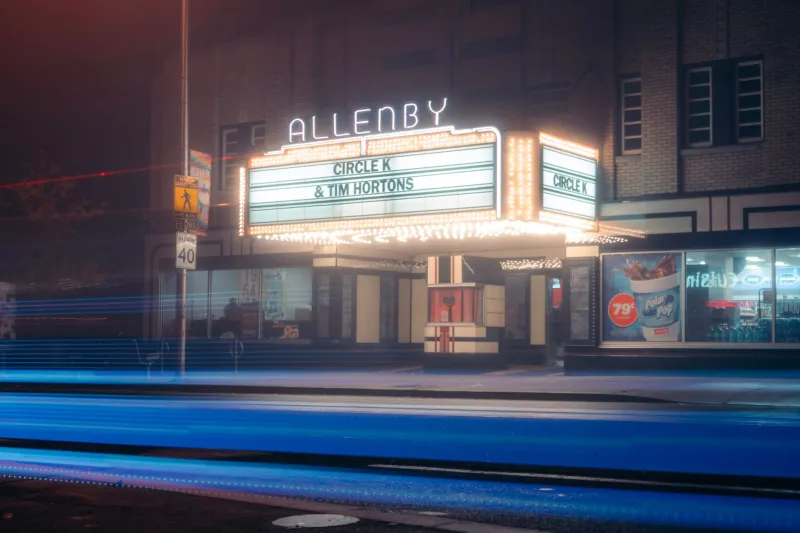
But the people doing this work are not operating from a place of grief. Or not only from grief. There's a stubborn, almost defiant optimism in the way they talk about these buildings. An insistence that a marquee lit up again over a main street is not nostalgia — it's something more alive than that.
Cinema, at its best, has always been about the suspension of disbelief. The willingness to sit in a darkened room and accept that what you're seeing is real, even when you know it isn't. Maybe that's why the people saving these theaters feel so at home in the work. They've already decided to believe in something that everyone else keeps calling impossible.
And honestly? So far, more often than you'd expect, they've been right.