Against the Clock: The Quiet Fight to Pull American Cinema Back from the Brink
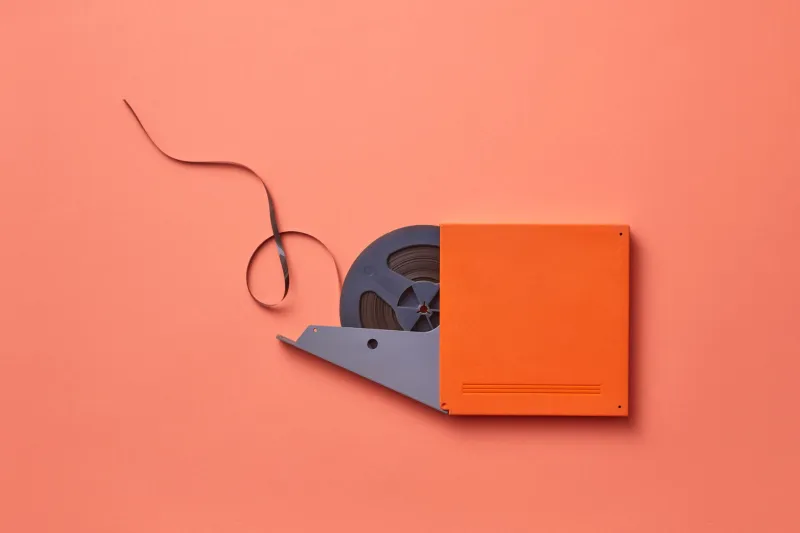
Somewhere in a climate-controlled vault, a canister of film is slowly eating itself alive.
It's not dramatic. There's no smoke, no alarm, no obvious sign that anything is wrong. But inside that sealed metal tin, a chemical process called nitrate decomposition is quietly reducing irreplaceable footage to a sticky, acidic sludge. Given enough time and the wrong conditions, an entire film — its performances, its lighting choices, its cultural fingerprint — simply ceases to exist.
This is the reality facing American film preservation right now. And it's happening faster than most people realize.
The Chemistry of Loss
Nitrate film stock, used extensively in Hollywood from the late 1800s through the early 1950s, is notoriously unstable. It's flammable enough to burn underwater. It off-gasses toxic fumes. And when it deteriorates, it doesn't go quietly — it takes everything recorded on it straight into oblivion.
The Library of Congress has estimated that roughly 70 percent of all silent films and about 50 percent of films made before 1950 are already gone. Forever. That's not a projection or a warning. That's a historical accounting of what we've already lost.
Among the casualties: early comedies that shaped the grammar of slapstick, melodramas that reflected the anxieties of immigrant communities, westerns that documented — however imperfectly — a mythology Americans were still actively building. Gone. Not in fires or floods, though those happened too. Just gone, because nobody got there in time.
The People Who Show Up Anyway
Ask anyone working in film preservation why they do it, and you'll get an answer that sounds less like a job description and more like a calling.
At the UCLA Film & Television Archive, one of the largest repositories of moving image material in the world, preservation specialists work with everything from warped 35mm reels to decaying magnetic tape. Their mandate is enormous and their resources are never quite enough. Yet the work continues — painstaking, unglamorous, and critically important.
The National Film Preservation Foundation, a nonprofit affiliated with the Library of Congress, has helped fund the restoration of hundreds of titles since its founding in 1996. Many of those films weren't famous. They weren't Oscar winners. They were regional productions, experimental shorts, newsreels, and home movies that happened to capture something true about American life at a specific moment in time.
That's actually the point. Preservation isn't just about saving the masterpieces. It's about saving the texture.
The Near-Misses That Keep Preservationists Up at Night
Some of the most compelling stories in this world are the ones that almost ended differently.
Take Metropolis, Fritz Lang's 1927 science-fiction epic. For decades, the only available prints were severely truncated versions that left the film's narrative incomplete. Then, in 2008, a nearly complete 16mm print turned up in a museum archive in Buenos Aires — a discovery that allowed for a restoration closer to Lang's original vision than anyone thought possible. The film had been sitting there, largely unexamined, for decades.
Closer to home, the American silent film The Penalty (1920), starring Lon Chaney, survived in fragments for years before a more complete print was located. Chaney's performance — physically demanding, emotionally raw — had nearly been reduced to a footnote.
Then there's the case of Something Good — Negro Kiss (1898), a short film rediscovered in 2018 that features two Black performers sharing a kiss on screen at a time when such imagery was essentially invisible in mainstream American cinema. Its survival wasn't guaranteed. Its rediscovery changed the historical record.
These aren't just lucky breaks. They're the result of people who refused to stop looking.
What Gets Saved — and What Doesn't
Here's the uncomfortable truth that sits at the center of every preservation conversation: not everything can be saved. Resources are finite. Storage is expensive. Digitization takes time and money that institutions frequently don't have.
So choices get made. And those choices reflect something real about what a culture values.
Films with commercial recognition tend to get prioritized. Films made by women and filmmakers of color — already underrepresented in the historical record — are frequently at the back of the line, or not in line at all. The gaps in our cinematic archive aren't random. They follow the same fault lines as every other cultural institution.
This is what makes the work of organizations like the Sundance Institute's film preservation initiative or the Academy Film Archive so significant. They're not just preserving movies. They're making arguments about what counts as worth remembering.
The Digital Question
A common assumption is that digital formats have solved the preservation problem. They haven't.
Digital files degrade too — through bit rot, format obsolescence, and simple data loss. A film stored on a hard drive in 2005 may be completely inaccessible by 2025 if no one maintained that drive or migrated the files to a current format. In some ways, the digital era has created a new preservation crisis layered on top of the old one.
The archivists who understand this best tend to advocate for a hybrid approach: digitize for access, but maintain physical prints for long-term survival. Cold storage vaults that keep nitrate and acetate film at carefully controlled temperatures and humidity levels remain the gold standard for preservation, even in 2024.
Why Any of This Matters
Film is the art form that most completely captured the 20th century. It documented how people moved, spoke, dressed, and dreamed. It reflected — sometimes honestly, sometimes with deep distortion — the anxieties and ambitions of the society that made it.
When a film disappears, we don't just lose entertainment. We lose evidence. We lose a specific way of seeing the world that existed at a specific moment in time and will never exist again.
The people racing to prevent that loss aren't famous. They don't have their names on marquees. But in the long arc of how cinema gets remembered, they might matter more than almost anyone else.
Because a story you can't watch is a story that's already been forgotten.