Turning Down the Volume: How American Moviegoers Are Rediscovering the Power of Quiet Films
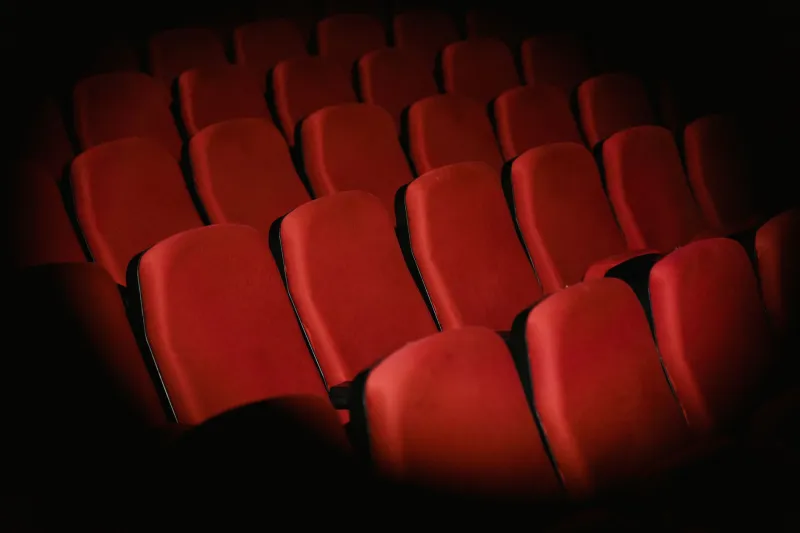
Let's call it what it is: we got loud. Not just in movie theaters, where Dolby Atmos sound systems can rattle your sternum from three rows back, but in the whole ambient texture of how American entertainment got built over the past two decades. Every streaming thumbnail screams urgency. Every trailer is a sensory assault calibrated to generate maximum dopamine in ninety seconds. Every blockbuster is designed, at some fundamental level, to make you feel like you cannot look away because something enormous is always about to happen.
And then, quietly — appropriately quietly — something started shifting.
The Exhaustion Is Real
Talk to anyone programming a serious art-house cinema in the US right now and they'll tell you the same thing in slightly different words: audiences are tired. Not tired of movies — never that — but tired of the specific flavor of relentlessness that mainstream cinema has been serving for years.
Katie Reyes, who programs for an independent theater in Portland, Oregon, put it plainly in a recent conversation: "We started adding more slow-cinema titles about two years ago, almost as an experiment. What we didn't expect was that those screenings would sell out first. People aren't coming to these films despite the pace. They're coming because of it."
This isn't isolated anecdote. Specialty box office data from 2023 and into 2024 showed consistent overperformance from films that critics had labeled difficult or demanding — films with long takes, minimal dialogue, and narratives that trusted audiences to fill in silence with their own thinking. Distributors who specialize in art-house releases have noted that their most deliberately paced titles are finding audiences beyond the traditional coastal art-house demographic, showing up in mid-sized markets that would have been considered risky bookings five years ago.
What the Streaming Numbers Hint At
Streaming data is notoriously hard to read from the outside, but the signals worth paying attention to are the ones the platforms themselves broadcast through their behavior. The quiet proliferation of Criterion Channel subscriptions — the service dedicated almost entirely to challenging, international, and classic cinema — is telling. So is the fact that MUBI, which built its entire identity around slow, auteur-driven film, has expanded its US presence meaningfully and stopped feeling like a secret shared only among film students.
Meanwhile, some of the most-discussed viewing experiences of the past couple of years have been films that barely registered on the action-spectacle scale. Ryusuke Hamaguchi's work found genuine American audiences. So did slow-burn domestic dramas and nature-focused documentaries that would have seemed uncommercial in a different moment. These aren't flukes. They're data points in a pattern.
The pattern suggests that a meaningful segment of American viewers — and it's growing — has started actively curating their watching against the grain of the algorithm. They're not looking for what's trending. They're looking for what will actually make them feel something that lasts longer than the runtime.
The Psychology of Overstimulation
There's real science underneath the cultural moment. Psychologists who study media consumption have written extensively about what sustained high-stimulation content does to attention and emotional regulation. The short version: constant sensory escalation raises the baseline threshold for what registers as interesting or moving. You need more noise to feel the same amount of feeling.
Quiet films work against that mechanism. A long, unbroken shot of a face. A conversation where what isn't said matters more than what is. An ending that doesn't explain itself. These things demand a different kind of attention — slower, more active, more genuinely engaged. And for viewers who've been living in the high-stimulation lane for years, that shift can feel almost physically relieving.
This is why the growing interest in silent-era screenings makes a certain perfect sense. Events pairing classic silent films with live musical accompaniment have been selling out at venues from the Music Box Theatre in Chicago to the Alamo Drafthouse circuit. These aren't nostalgia events for people who grew up with silent film. The audiences skew younger than you'd expect. What they're after is the specific texture of a film that has no choice but to communicate through image and movement — pure cinema, before sound gave filmmakers an easy shortcut.
What This Means for Storytellers
Here's the genuinely optimistic part of this diagnosis, and it's worth sitting with.
If American audiences are genuinely recalibrating toward patience — toward films that breathe, that trust silence, that let emotion accumulate rather than detonate — then the commercial case for quieter, bolder filmmaking gets stronger. Not ironclad, not immediately. The blockbuster machine isn't going anywhere, and it doesn't need to. But the market for serious, demanding cinema isn't a charity case anymore. It's a real audience with real spending patterns, and it's getting harder to dismiss.
For writers, directors, and producers working outside the studio system — or even within it, trying to carve out space for something different — this is meaningful. The conversation with distributors and exhibitors shifts when you can point to actual audience behavior rather than just critical consensus. "People want this" is a more powerful sentence than "critics think this matters," even if both things are true.
The filmmakers who've been making quiet, image-driven work for years without obvious commercial validation are suddenly looking prescient rather than stubborn.
A Cultural Correction, Not a Revolution
It would be easy to overstate this. The Marvel machine is still a machine. The summer blockbuster season still dominates the cultural calendar. Most Americans still go to the movies primarily looking for entertainment in the most uncomplicated sense of that word, and there's absolutely nothing wrong with that.
But cultural corrections don't need to be revolutions to matter. A meaningful shift in what a significant portion of the audience actively wants — more space, more silence, more trust — is enough to change what gets made, what gets distributed, and what gets talked about. It changes the environment in which ambitious filmmakers operate, and that has downstream effects on the whole ecosystem.
At EveDonus Film, we've always believed that cinema is most alive when it makes demands. When it asks something of you rather than just delivering sensation. The quiet films, the slow ones, the ones that end without wrapping everything up — those are the ones that tend to stay with you longest.
The fact that more American audiences seem to be figuring that out on their own? That's not a trend piece. That's a reason to be genuinely hopeful about where movies go next.