One Screen, One Town: The Stubborn Magic of America's Last Independent Movie Houses
One Screen, One Town: The Stubborn Magic of America's Last Independent Movie Houses
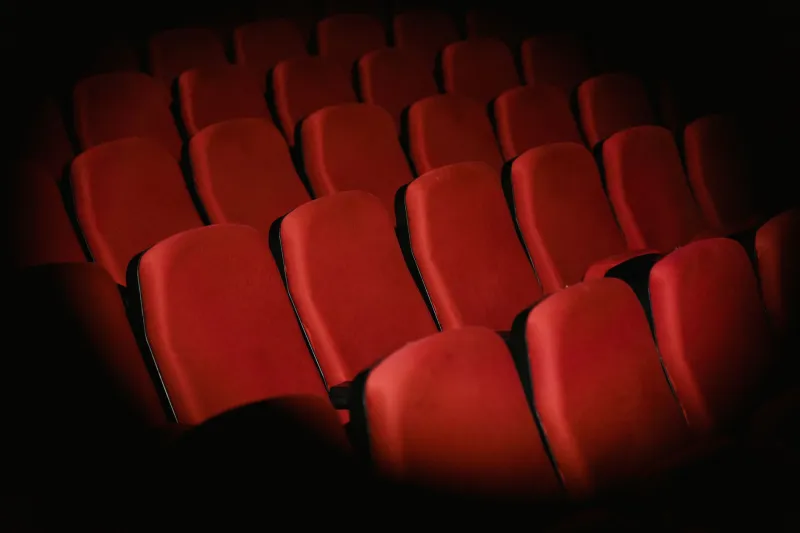
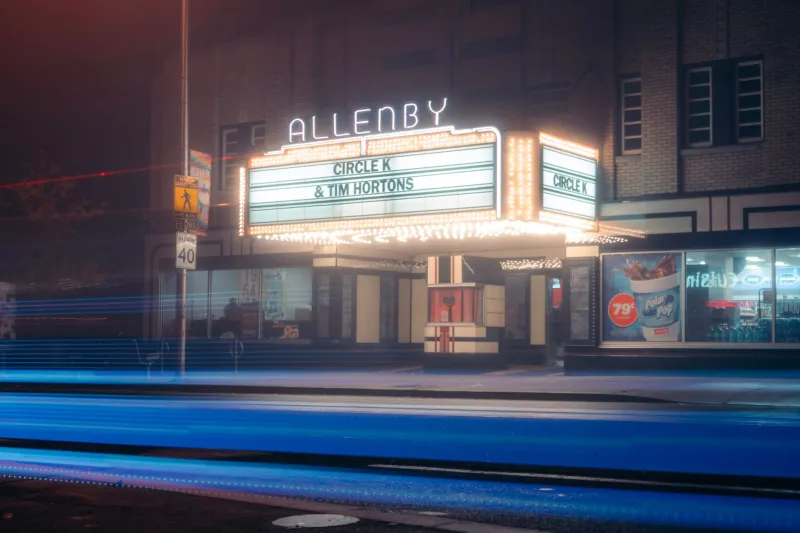
There's a particular kind of quiet that settles over a small town on a Friday night when the marquee letters have been swapped out by hand, the popcorn machine is humming, and maybe forty or fifty people are shuffling inside to see the same movie at the same time. It's a ritual that feels almost antique now. And yet, stubbornly, beautifully, it persists.
Across the United States — in the kinds of places that don't make it onto studio release maps — a few hundred single-screen theaters are still open. Not multiplexes. Not luxury recliners with app-based ordering. Just one screen, one room, and an owner who probably fixed the projector themselves last Tuesday.
These places aren't relics. They're resistors.
The Numbers Behind the Defiance
At the peak of American moviegoing culture in the mid-20th century, there were roughly 20,000 movie theaters operating across the country. Today, the National Association of Theatre Owners counts somewhere around 5,000 active locations — and the single-screen, independently owned variety represents a shrinking slice of that total. The pandemic accelerated closures that were already years in the making. Streaming didn't kill these theaters outright, but it changed the math in ways that were hard to recover from.
Still, the ones that made it through have a story worth telling.
Take the Roxy Theater in Missoula, Montana — not to be confused with the various other Roxys scattered across the country, each one its own small monument to a particular town's cinematic ambitions. Or the Strand in Rockland, Maine, which has been operating since 1923 and still hosts film festivals, live music, and the occasional town hall meeting under its original ceiling. These aren't museums. They're working venues, and the people behind them work hard to keep them that way.
What an Owner Actually Does
Ask anyone who runs one of these places what their job is, and the answer won't be simple. On any given week, a single-screen theater owner might negotiate film licensing fees with a studio distributor, repair a sticky seat, design a social media post, book a local band for a pre-show set, apply for a historic preservation grant, and personally thank every patron who walks through the door by name.
The economics are genuinely difficult. Film licensing for independent theaters can eat up 50 to 70 percent of ticket revenue, depending on the title and the terms. Concessions aren't just a nice bonus — for many of these venues, they're the margin between staying open and shutting down. A bad weather weekend in February in a town of 3,000 people is not an abstraction. It's a real financial hit.
And yet the owners keep going. Because for most of them, this stopped being a business calculation a long time ago. It became something closer to a calling.
More Than Movies
What makes single-screen theaters genuinely irreplaceable isn't just the films they show. It's what they represent in the texture of a town's life. These are the places where generations have had first dates, where kids have seen their first movie on a big screen, where communities have gathered after tragedies and before celebrations. They hold memory the way old buildings do — not just structurally, but culturally.
In small-town America, where the grocery store, the diner, and the hardware shop have often already given way to chains or closures, the local movie theater can be one of the last truly shared public spaces. It's a room where strangers sit in the dark together and feel something at the same time. That's rarer than it sounds.
Some of these theaters have leaned into that role explicitly. They screen classic films alongside new releases. They host Q&As with regional filmmakers. They rent out the space for graduation parties and anniversary screenings of movies that meant something to a particular family. The programming becomes a kind of curation of community identity — a reflection of who a town is and what it cares about.
The Streaming Question
It would be easy to frame this as a simple David-and-Goliath story: scrappy local theater versus the algorithmic behemoth. But the owners of these places tend to be more nuanced about it. Most of them use streaming services themselves. Most of them understand that the landscape has changed permanently.
What they push back against is the idea that the experience is interchangeable. Watching a film alone on a laptop and watching it in a room full of people who all gasped at the same moment are not the same activity. They might share a title, but they're fundamentally different things. One is consumption. The other is communion.
The theaters that are surviving tend to understand this distinction and build their identity around it. They're not trying to compete with Netflix on convenience. They're offering something Netflix structurally cannot: the physical, social, irreproducible experience of being in a room together.
The Question of What Gets Lost
When a single-screen theater closes — and they do close, quietly, without much national fanfare — what exactly disappears?
The building often stays. Sometimes it becomes a restaurant or a church or a storage facility. The marquee might even remain, letters frozen in whatever the last showing was, a small ghost of the thing it used to announce. But the function is gone. And with it, something harder to name.
There's a version of American filmgoing culture that belongs specifically to these small venues — the experience of cinema not as an event requiring a trip to a suburban megaplex, but as a natural part of a town's weekly rhythm. When that disappears from a community, the community doesn't necessarily notice all at once. It's more like a slow dimming. The option closes. The habit fades. And eventually, an entire generation grows up never knowing what it felt like to see a movie in a room that remembered their grandparents.
Holding the Line
The people keeping these theaters alive aren't naive about the odds. They know the model is fragile. They know that one bad year, one expensive repair, one failed grant application could be the end. Some of them have succession plans; many don't. The question of who takes over when the current owner can't continue is one that hangs over nearly every independent theater in the country.
But they show up anyway. They change the marquee letters by hand. They fix the projector. They pop the corn. And on Friday night, when the lights go down and the screen comes alive, they stand in the back and watch the audience watch the movie — and for a little while, at least, the math doesn't matter.
That's the thing about these places. They've never really been about profit. They've always been about the stubborn human belief that stories are better when you share them. And as long as someone believes that — really believes it, enough to stake their livelihood on it — somewhere in small-town America, the projector will keep running.