The Memory Keepers: Inside the Vanishing World of Hollywood's Script Supervisors
The Memory Keepers: Inside the Vanishing World of Hollywood's Script Supervisors
There's a scene in a mid-budget thriller — you've probably seen a dozen like it — where the detective slams a glass of whiskey on the table, storms out, and returns three scenes later. The whiskey is gone. The glass has moved. The lighting is different. You notice something feels off, even if you can't name it. That nagging wrongness? That's what happens when the person whose entire job is to prevent it wasn't given enough time, enough support, or enough respect to do their work properly.
That person is the script supervisor. And in Hollywood right now, they're becoming an endangered species.
The Job Nobody Can Fully Explain at Dinner Parties
Ask a script supervisor what they do, and they'll usually laugh before answering. The title sounds administrative. The reality is something closer to a cross between a photographic memory champion, a continuity detective, and a one-person archive.
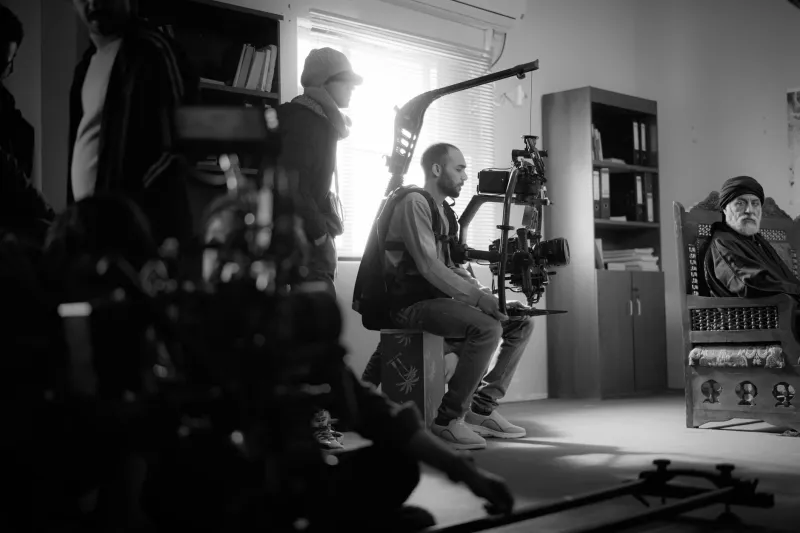
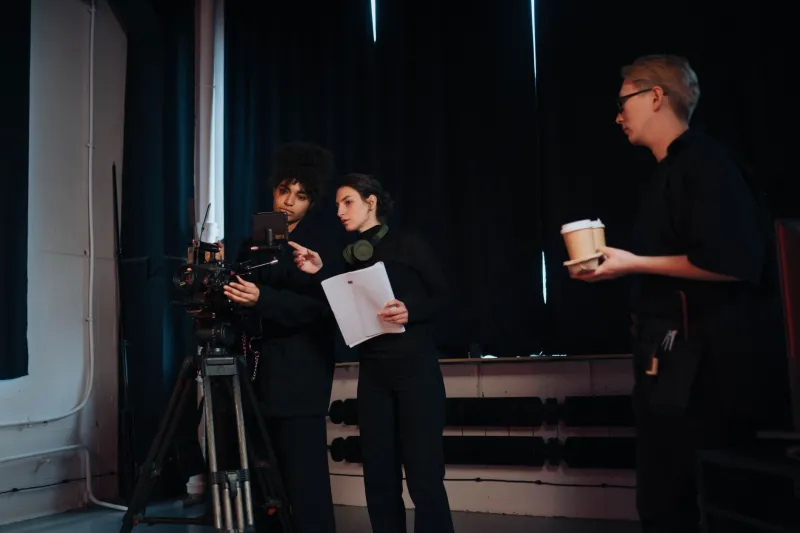
On any given shooting day, a script supervisor tracks what the director has covered and what still needs to be shot. They log every take — noting which ones the director likes, which ones had technical issues, which performance felt alive. They watch the actors with forensic attention: which hand held the phone, which shoulder the bag was slung over, whether the jacket was zipped or open. They maintain a running record of the film's internal logic so that when the editor sits down months later with footage shot wildly out of sequence, the story can actually be assembled into something coherent.
Veteran script supervisor Diane Hensley, who has worked on more than forty features over a thirty-year career, describes it simply: "I'm the film's memory. When the director forgets what they shot six weeks ago — and they always do — I'm the one who knows."
Out of Order, Out of Mind
Here's something casual moviegoers rarely think about: almost nothing in a film is shot in the order you watch it. A scene that appears in the first ten minutes might have been filmed on the last day of a three-month shoot. The emotional arc of a performance, the physical state of a character, the props on a table — all of it has to match across days, weeks, and sometimes continents of production.
That's not a job for software. Not really. Not yet.
Digital continuity tools have gotten better, no question. Production apps can log photos, flag inconsistencies, and organize shot data faster than any human with a notepad. But they can't watch an actor's hand drift unconsciously toward the wrong pocket. They can't catch the moment a background extra switches from standing to leaning between coverage angles. They can't feel when something is emotionally off — when a character's energy in a close-up doesn't match the wide shot filmed a week earlier.
"The apps are great for organizing," says Marcus Webb, a script supervisor based in Los Angeles who has worked steadily in television and film for nearly two decades. "But they don't watch. I watch. That's the whole job."
The Budget Squeeze and What It's Costing Us
The uncomfortable truth is that script supervisors are increasingly being treated as a luxury. In an industry obsessed with trimming below-the-line costs, their position — which requires experience, instinct, and an almost uncomfortable level of obsessive focus — is sometimes cut, consolidated, or handed off to a less experienced hire at a lower rate.
On some smaller productions, the job gets folded into other roles. On others, a junior crew member with a camera app is handed the responsibility and told to figure it out. The results show up on screen in ways that audiences feel without understanding, and that critics sometimes attribute to bad editing or weak direction.
The real culprit is often invisible — because the person who would have caught the problem wasn't there, or wasn't supported, or wasn't listened to.
"I've had directors wave me off mid-take," Hensley says, her voice measured. "And then six months later, in post, someone's on the phone asking why the eyeline is wrong in the cut. I knew. I flagged it. Nobody wanted to hear it on the day."
This is the particular frustration of the script supervisor's world: their expertise is most valued when it's too late to use it.
A Craft Built on Trust — and Losing It
The best working relationships between directors and script supervisors look less like a hierarchy and more like a creative partnership. The director trusts that someone is watching the things they can't watch while they're watching everything else. The script supervisor trusts that their notes will be taken seriously, their flags respected, their institutional knowledge of the film treated as the asset it actually is.
That trust, several supervisors say, is harder to find than it used to be.
Part of it is generational. Directors who came up through the traditional studio system learned early what a great script supervisor was worth. Filmmakers who came up through YouTube, short-form content, or self-funded indie work sometimes arrive on their first major set without any framework for what the role even means.
"I had a first-time feature director ask me if I was basically just taking notes," Webb recalls. "By the end of the shoot, he was calling me before every setup. But it took time to build that. And not every production gives you that time."
What Gets Lost in the Frame
Continuity errors are easy to laugh at. There are whole YouTube channels dedicated to cataloging them — the disappearing necklace, the sandwich that shrinks between bites, the car that switches lanes in a chase sequence. They're fun to spot. They're less fun to think about seriously.
Because the real cost of losing experienced script supervisors isn't just the coffee cup in the wrong hand. It's the cumulative erosion of a film's believability. Audiences are sophisticated. They may not consciously register every mismatch, but their trust in the story's reality quietly erodes. The dream gets harder to sustain. The seams show.
Film, at its best, is a kind of collective agreement — a shared suspension of disbelief. The script supervisor is one of the people in the room whose entire job is to protect that agreement, take by take, hour by hour, across an entire production.
Keeping the Thread Alive
There are still great script supervisors working in Hollywood. They're on the sets of prestige dramas and genre films and the occasional blockbuster where someone with authority understood their value before the budget conversation started. They're training younger crew members when they can, passing on a craft that lives almost entirely in lived experience rather than any formal curriculum.
But the pipeline is thinner than it should be. And the conditions that allow the craft to be practiced well — adequate prep time, a director who listens, a production that treats crew knowledge as an investment rather than a line item — are not guaranteed.
What gets lost when the memory keepers disappear isn't just continuity. It's the particular kind of human attention that makes a film feel whole. The kind that no app, no algorithm, and no shortcut has yet learned to replicate.
Somewhere on a set right now, someone with a well-worn notebook and a very good eye is watching a scene unfold and quietly catching the thing nobody else noticed. That's the job. That's always been the job.
We should probably start treating it like it matters.