Ghosts Between Takes: The Slow Disappearance of Hollywood's On-Set Still Photographers
Ghosts Between Takes: The Slow Disappearance of Hollywood's On-Set Still Photographers
There's a photograph most film lovers know without realizing it. Maybe it's Paul Newman leaning against a trailer wall between setups, cigarette in hand, eyes somewhere else entirely. Or Meryl Streep mid-laugh with a grip crew she'd known for three weeks and would probably never see again. These aren't scenes from any movie. They're something rarer — stolen moments from the space between the art, caught by a single person whose job title most audiences couldn't name if you spotted them the first letter.
That person was the unit still photographer. And in 2024, they're nearly extinct.
The Job Nobody Talked About
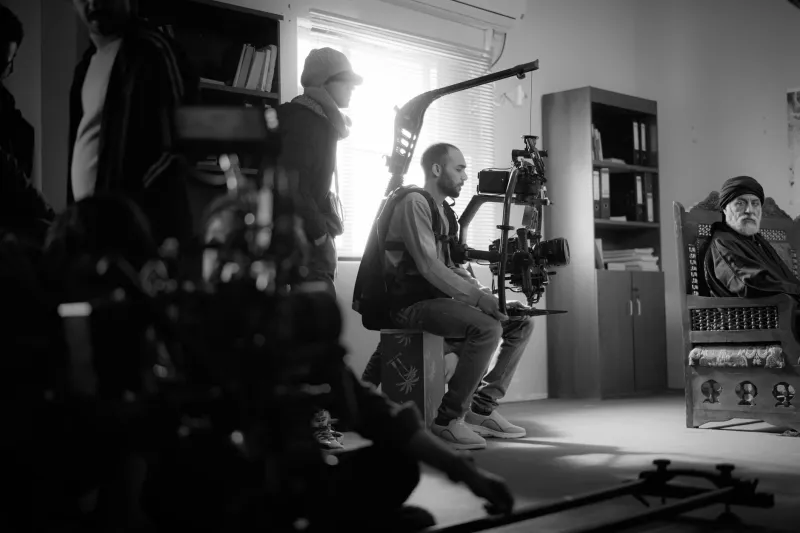
For most of Hollywood's working history, every major production employed at least one dedicated still photographer. Their job was deceptively simple: document the film without getting in the way of making it. They shot continuity stills — detailed reference images that helped editors and costume departments maintain consistency across shooting days. They captured publicity shots — images that would eventually land in press kits, on lobby cards, in magazine spreads, and on the posters plastered across every multiplex in America.
But the best of them did something beyond the technical brief. They framed the human texture of filmmaking itself. The exhaustion on a director's face at hour fourteen of a shoot. The way two actors found their chemistry during a lunch break rather than in front of a lens. The quiet rituals of a crew that had been living in the same bubble for months.
Veteran Hollywood photographer Sam Emerson, who spent decades on sets ranging from Purple Rain to Django Unchained, has described the role as being "part journalist, part anthropologist, and part ghost." You had to move through a working set without disrupting it, earn the trust of people under enormous pressure, and somehow translate all of that chaos into a single frame that felt inevitable.
What Replaced Them — and What Didn't
The decline didn't happen overnight. It crept in the way most creative losses do — quietly, through budget line items and shifting priorities.
Digital cameras made everyone a photographer. Smartphones made it worse. Suddenly, cast members were posting their own behind-the-scenes content to Instagram before the dailies had even been reviewed. Studios, recognizing the marketing value of social media buzz, began building dedicated digital content teams into productions — small crews tasked specifically with generating shareable video clips and casual snapshots for platforms hungry for constant engagement.
On paper, that sounds like more coverage, not less. In practice, it gutted the role of the unit still photographer almost completely. Why pay a specialist day rates when the second assistant director has a decent iPhone and the talent is already posting selfies?
The answer, of course, is craft. But craft is a hard thing to budget for when the algorithm doesn't care about it.
What Gets Lost in the Compression
Here's the thing about social content: it's made to be consumed and forgotten. A behind-the-scenes reel posted to a studio's TikTok account in the week before a film's release serves a specific, short-term purpose. It generates clicks, drives pre-sale tickets, and disappears into the feed within 48 hours.
The photographs taken by a skilled unit still photographer were never meant to be ephemeral. They were meant to outlast the film itself.
Think about the cultural staying power of images like Gordon Parks' documentation of Shaft, or the iconic behind-the-scenes photography from the original Star Wars trilogy shot by John Jay and others. Those images didn't just market movies — they became part of how we understand those films' places in history. They gave future filmmakers, film students, and film lovers a window into a world that no longer exists.
When a production wraps today and its social content team disperses, what survives? Compressed video clips optimized for a platform that may not exist in ten years. Casual snapshots without context or authorship. Nothing curated, nothing archived, nothing made with the intention of lasting.
The Relationship That Made It Work
What veteran still photographers consistently emphasize — and what no algorithm can replicate — is the relationship. A good unit photographer spent weeks, sometimes months, building trust with a cast and crew. They learned when to raise the camera and when to lower it. They understood that the most revealing image of a film's production might happen in a moment nobody was watching for.
That kind of access doesn't come from a content team that rotates in for a day of approved behind-the-scenes footage. It comes from showing up every day, being present without being intrusive, and earning the right to witness something real.
Photographers like Merrick Morton, whose work spans films from Traffic to No Country for Old Men, have talked about the way long-term presence changes what you're allowed to see. Early in a shoot, people perform for the camera. Two months in, they forget you're there. That's when the real pictures happen.
A Record Nobody Thought to Keep
There's a preservation angle here that the film community hasn't fully reckoned with. The archives of great unit still photographers represent an extraordinary visual history of American cinema — not just as an art form, but as an industry and a culture. The labor of it. The geography of it. The faces of the hundreds of crew members who never appear in any credits but whose hands built every frame.
Some of that archive is actively endangered. Photographers who worked through the '70s, '80s, and '90s hold enormous collections of negatives and prints that have never been digitized, never been formally archived, and in some cases are stored in garages and storage units that won't survive another decade of neglect.
A few institutions — the Academy's Margaret Herrick Library chief among them — are working to change that. But the pace of collection lags far behind the pace of loss.
Why It Still Matters
At EveDonus Film, we talk a lot about where cinema lives. And one honest answer is that it lives in the spaces between the takes — in the images that captured what it actually felt like to make something. That feeling doesn't transmit through a vertical video optimized for a phone screen. It transmits through a photograph made by someone who understood both the craft of the image and the craft of the film being made around them.
The unit still photographer wasn't just a marketing function. They were a witness. And when a film wraps without one, something goes undocumented — not the movie itself, but the human act of making it.
That might seem like a small loss against everything else the industry is navigating right now. But small losses have a way of accumulating. And one day, someone will go looking for the photographs that should exist — the ones that would tell us what it was really like on that set, in that year, making that particular piece of cinema — and find nothing there.
The ghost will be gone. And nobody will have noticed until it was already too late.