Be Kind, Rewind Forever: The Last Video Stores in America and the Folks Who Never Left
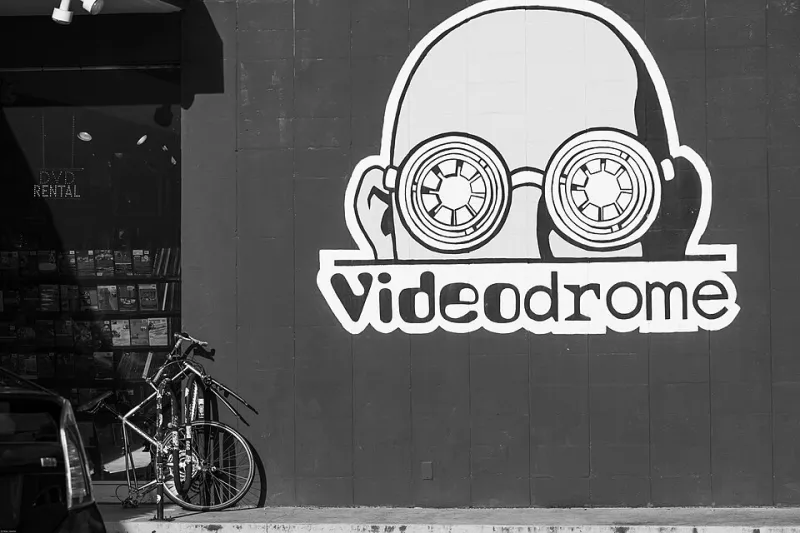
Photo: Marc Merlin, CC BY-SA 4.0, via Wikimedia Commons
There's a moment that happens in every surviving video store in America. A customer walks in looking for something to watch tonight, wanders the aisles for ten minutes, and walks out with three movies they'd never heard of and a conversation they didn't expect. That moment — the accidental discovery, the human recommendation, the physical act of choosing — is what streaming was supposed to replace. It didn't. It just made us forget what it felt like.
Now, against all odds, we're remembering. Independent video rental stores, written off as dead a decade ago, are quietly holding on across the country. A few are even growing.
The Ones That Refused to Close
Start with the legends. Kim's Video, the East Village institution that once traded in mafia-adjacent mystery and a legendary collection shipped off to Sicily, has clawed its way back to a new home on Manhattan's First Avenue. Scarecrow Video in Seattle sits on a rental catalog of over 145,000 titles, making it arguably the largest publicly accessible film collection on Earth. Video Visions in the Hudson Valley still does brisk weekend business. Vidiots in Los Angeles closed in 2017, mourned like a dead friend — then reopened in 2023 in Eagle Rock, bigger than before, complete with a screening room and a theater.
These aren't museums. People rent from them. Weekly.
And then there are the one-person operations, the ones nobody writes think pieces about. A single shop in a small Ohio town. A converted storefront in rural Vermont where the owner still knows every customer's taste by heart. These stores survive not on foot traffic from film nerds but on being the only place within thirty miles where a neighbor can ask another human, "What should I watch with my kids tonight?"
What Streaming Actually Took From Us
Here's the uncomfortable part. We didn't just lose the stores. We lost the shelf.
Streaming platforms present a curated few dozen titles on your home screen and bury the rest in a search function. Worse, they delete. HBO Max pulled dozens of its own films from existence for tax write-offs. Netflix removes originals with no physical release at all — when those titles leave the service, they are simply gone. You cannot rent what no longer exists on a shelf anywhere.
A video store's inventory is the opposite of an algorithm. It's a physical argument about what matters, arranged by a person who gets paid (barely) to have opinions. The staff pick wall isn't marketing. It's criticism.
There's also the matter of what psychologists might call friction with a purpose. Browsing requires leaving the house, talking to strangers, and committing to a choice. Streaming's infinite scroll was sold as freedom; it mostly delivered decision paralysis. A shelf has edges. Edits help.
Nostalgia Is the Door, Curation Is the Reason
Ask the owners why business is ticking up and they'll tell you the truth: yes, people come in for the nostalgia. Gen Z customers photograph the aisles. Thirty-somethings relive their childhood Friday ritual. But nostalgia doesn't sustain a business model — return visits do.
And return visits happen because of curation. These stores stock the deep cuts, the regional horror, the foreign cinema, the complete filmographies of directors whose work streams nowhere in its entirety. Scarecrow's collection contains titles unavailable on any platform at any price. When a streaming service deletes a movie, video stores become, almost by accident, the last copy on Earth.
Some have added coffee counters, zine libraries, midnight screenings, and community bulletin boards. They've stopped pretending to be convenient and started being something better: a third place. A hangout with a late fee structure.
The People Who Never Rented Again — and the Ones Who Came Back
There are two kinds of customers keeping these lights on. The first never left. Renters who maintained memberships through the streaming boom, often out of loyalty, sometimes out of principle, occasionally out of a home theater setup that demands Blu-ray quality no compression can match.
The second kind is newer and more surprising: the returners. People who canceled a streaming service, realized their viewing habits had calcified into reruns, and wandered back into a video store for the first time in fifteen years. Collectors hunting out-of-print discs. Parents who want their kids to understand that choosing a movie can be an event, not a default.
Why It Matters That They Survive
A country with video stores is a country where film history stays physically alive. Where a teenager in Seattle can rent a 1962 Czech new wave film the same week it vanished from a streaming library. Where a small town still has one place where movie taste is passed hand to hand, shelf to shelf.
The streaming era made watching easier and choosing emptier. The survivors of the video store apocalypse are proof that some of us noticed the difference — and that a be-kind-rewind ethic was never really about the rewinding at all. It was about care. For the movies, and for the person you're handing them to.
So the next time you're stuck scrolling, find the nearest surviving store. Ask the person behind the counter what they loved this month. Take a chance on something with a cover that doesn't match the algorithm's guess about you.
That's not nostalgia. That's cinema, still breathing.