Down in the Stacks: Meet the Basement Historians Quietly Saving American Cinema's Forgotten Half
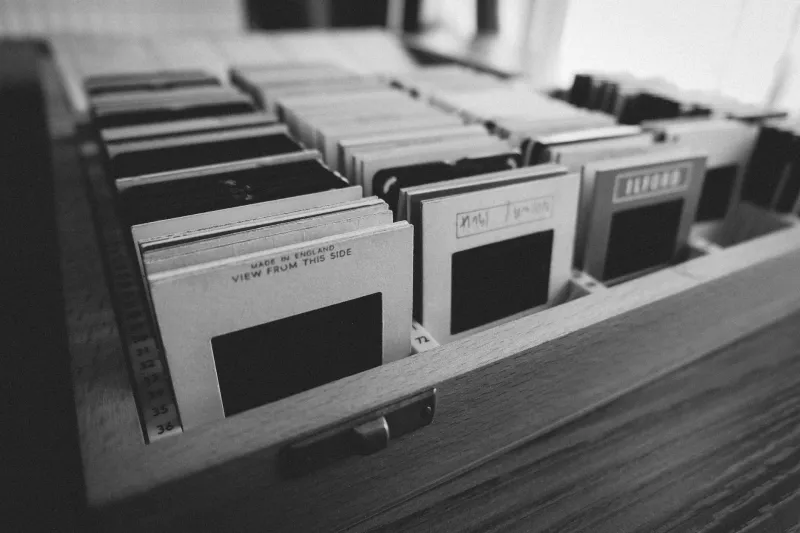
Somewhere in suburban Ohio, there are approximately four thousand film cans stacked in a converted garage. The owner, a retired schoolteacher named Dennis, has spent the last thirty years acquiring them from estate sales, theater closures, church basements, and the occasional dumpster. He's catalogued most of them in a spreadsheet that he updates by hand. He has no institutional affiliation, no grant funding, and no particular plan beyond the conviction that these films — promotional shorts, regional newsreels, industrial films, lost B-pictures — deserve to exist.
"Nobody else was going to do it," he says simply.
Dennis is not unusual. Across America, a distributed network of amateur archivists, passionate collectors, and obsessive film historians is quietly doing preservation work that falls entirely outside the official system. They operate in the gaps — saving the material that the Library of Congress, the Academy Film Archive, and the major studio vaults have decided isn't worth their limited resources. And in doing so, they're building an alternative record of American cinema that's richer, stranger, and more complete than the official one.
What the Institutions Miss
The major archives do extraordinary work, and it would be unfair to suggest otherwise. But they operate under real constraints — space, funding, staff — that force prioritization. The films that get preserved tend to be the ones that fit existing narratives of importance: canonical features, the work of recognized directors, films with obvious historical or artistic significance.
What falls through is everything else. And everything else turns out to be an enormous amount of cinema.
Regional genre films made for specific local markets. Educational shorts produced for school districts in the 1950s and 60s. Industrial films commissioned by companies that no longer exist. Amateur travelogues, home movies with genuine documentary value, drive-in exploitation pictures that documented American anxieties as vividly as any prestige production. Ethnic cinema made for immigrant communities. Early Black independent films that never entered the mainstream distribution system.
This material isn't unimportant. It's often more revealing about what ordinary American life looked like than the films that ended up on the American Film Registry. It just doesn't fit the categories that institutions use to justify preservation spending.
The Collectors and Their Methods
The people doing this work come from every background imaginable. There are former projectionists who couldn't bear to see the prints they'd run for decades get thrown away. There are film scholars who started collecting as a hobby and ended up with research collections that rival small university archives. There are enthusiasts who fell into it through a single discovery — a box of nitrate reels in a grandfather's attic, a cache of 8mm home movies at an estate sale — and never came back out.
What they share is a particular kind of obsessive attention. Finding things. Identifying them. Understanding what they are and why they matter. This is harder than it sounds — a lot of the material that circulates in collector networks is incompletely documented, mislabeled, or genuinely mysterious. Figuring out what you have can require significant research, and that research often produces genuinely new historical knowledge.
One collector in the Pacific Northwest has spent years tracking down surviving prints of films made by small regional studios in the 1930s and 40s — companies that operated in Portland, Seattle, and San Francisco making pictures for local audiences that never traveled east of the Rockies. He's found films nobody knew existed. He's also found films that were known to exist but presumed lost. The line between collector and historian, for him, dissolved a long time ago.
The Fragility Problem
Preservation is not the same as collection. Acquiring a film is only the first step; keeping it stable enough to survive is another challenge entirely.
Nitrate film — the format used before the 1950s — is notoriously unstable, and amateur collectors who encounter it face a genuine dilemma. Nitrate is flammable, it degrades in ways that can be unpredictable, and the cost of properly storing and transferring it is significant. Some collectors have developed real expertise in handling it safely; others have made the difficult decision to donate nitrate finds to institutions better equipped to deal with them, even when it means losing control of material they discovered.
Acetate film, which replaced nitrate, has its own preservation nightmare: vinegar syndrome, a deterioration process that produces acetic acid and eventually destroys the film base. Collectors who know what they're doing can slow the process with proper cold storage, but they're always working against time.
The digital transfer question adds another layer of complexity. Getting a film onto a stable digital format extends its life significantly, but scanning costs money, and the question of what to do with the resulting files — how to store them, how to share them, how to ensure they don't just sit on a hard drive somewhere and get lost in a different way — is one the amateur archivist community is still working through collectively.
Building the Alternative Record
What's remarkable about this community is how much knowledge-sharing happens across it. Online forums, email lists, and informal networks connect collectors who might never meet in person, allowing expertise and information to circulate freely. Someone in Texas who finds a batch of unidentified industrial films can post frame grabs to a forum and have them identified by someone in New Jersey who's spent twenty years cataloguing exactly that type of production.
This distributed intelligence is genuinely powerful. It's produced discoveries that have surprised even professional archivists — films found in places nobody thought to look, identified through connections nobody in an institution had made.
The historical picture that emerges from this grassroots preservation work is different from the official one. It's more regional, more diverse, more interested in the margins of American life. It includes the cinema that served communities the mainstream industry ignored. It includes the films that were made cheaply and quickly for audiences who wanted to see themselves on screen and didn't care about critical legitimacy.
This is American cinema too. Maybe it's the more honest half.
The Question of Access
The one real tension in the amateur archivist world is access. A film sitting in a private collection, however well-preserved, isn't doing the cultural work it could be doing. Some collectors are deeply committed to sharing their material — digitizing and uploading to archives like the Internet Archive, lending prints for screenings, working with researchers and filmmakers who want access.
Others are more protective, for reasons that range from legitimate concerns about rights and condition to something more personal — a collector's instinct to hold things close.
The ideal, most people in this world agree, is a pipeline: amateur collectors finding and stabilizing material, then getting it into systems where it can be studied, screened, and eventually made available to the public. That pipeline is imperfect and inconsistent, but it exists, and it's moving films from oblivion toward the light.
Dennis, back in his Ohio garage, puts it plainly. "I don't need to own these forever. I just needed to make sure they didn't disappear." He's still adding to the collection. He's also started scanning. The work, as always, continues.